







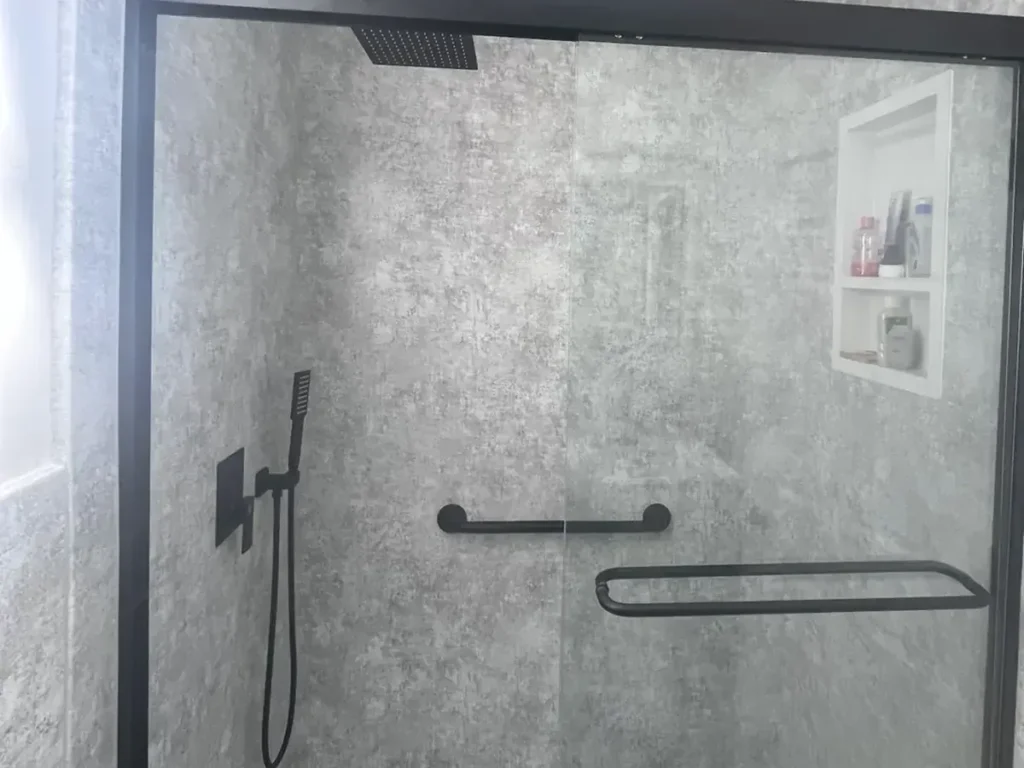
Tile is not waterproof on its own. What sits behind it decides whether your shower lasts or leaks.
The Layer You Never See Does the Most Work
Bathroom waterproofing is the membrane and backing behind the tile that keep water out of the walls and floor. In a Philadelphia rowhome it matters even more, because a slow shower leak can reach the ceiling below and even the wall you share with a neighbor.
Grout and tile let small amounts of water pass through over time. Without a proper barrier behind them, that water soaks into wood and drywall. Getting this layer right is the most important step in any shower remodeling project in Philadelphia.
Below, we explain how waterproofing works, what the code requires, why rowhomes are a special case, and what to ask before your shower is built.
How Does Bathroom Waterproofing Work?
A shower is a system. Each layer has a job, and a failure in one layer shows up somewhere else months later.
The Backing
Cement board, foam board, or other approved panels form the solid base behind the tile. Plain drywall is a poor choice in wet areas.
The Membrane
A liquid-applied or sheet membrane covers the backing and creates the waterproof layer. Seams, corners, and pipe openings get extra attention.
The Pan and Drain
The shower floor slopes to the drain, and the membrane ties into the drain so water has only one way out.
The Tile or Panels
The finish surface sheds most of the water, but it is not the real barrier. Grout lines in particular let moisture through.
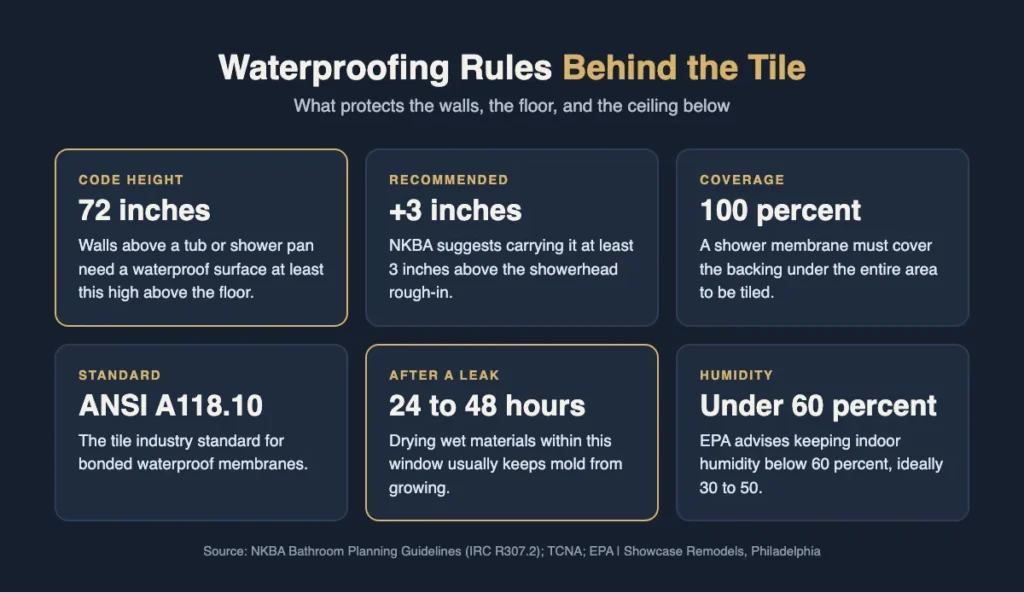
Coverage is the key rule. According to the Tile Council of North America, the membrane must cover the solid backing under the entire area to be tiled. A gap at a corner or a niche is where most leaks begin.
What Does the Code Require for Shower Waterproofing?
The residential code sets a clear minimum, as summarized in the National Kitchen and Bath Association planning guidelines. Walls above a tub or shower pan need a waterproof surface at least 72 inches above the finished floor.
Going Higher Is Better
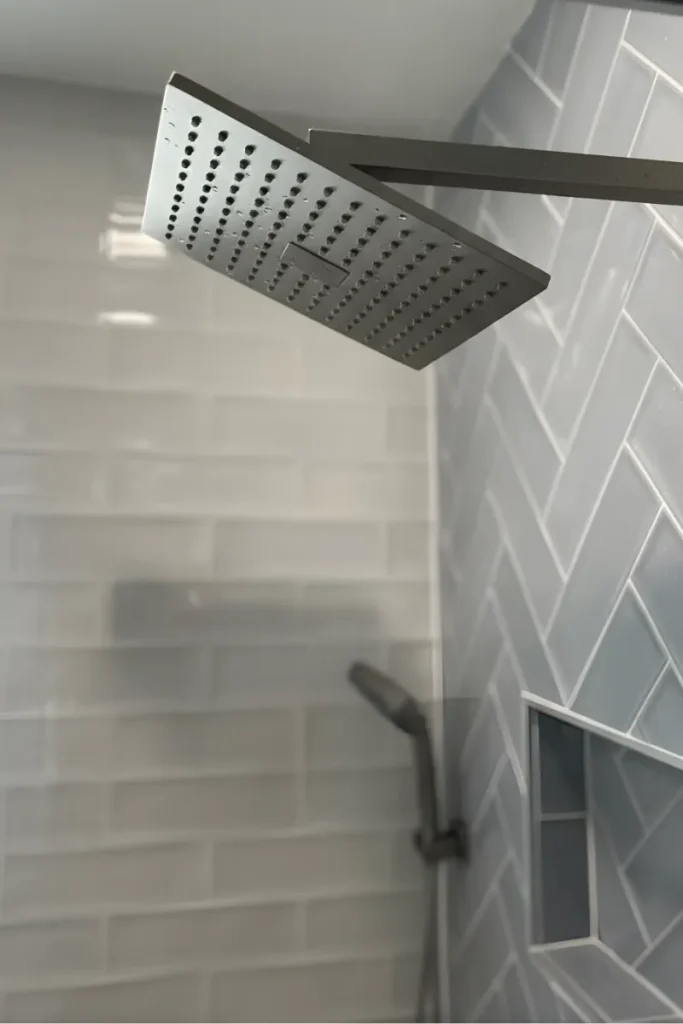
NKBA recommends extending the waterproof surface at least 3 inches above the showerhead rough-in. Tall showerheads and steam make that extra height worthwhile.
Industry Standards
The tile industry uses ANSI A118.10 for bonded waterproof membranes. Asking if your membrane meets that standard is a simple quality check.
Moisture Beyond the Shower
Waterproofing is only half of the plan. Steam has to leave the room too.
The EPA guide to mold and moisture says wet materials dried within 24 to 48 hours usually will not grow mold. It also advises running the bathroom fan when you shower and keeping indoor humidity under 60 percent.
Why Are Philadelphia Rowhomes at Higher Risk?
Rowhomes pack bathrooms into tight footprints, often right above the kitchen or living room. That layout turns a small leak into a big repair.
Water Travels Down
A failing shower pan on the second floor often shows up as a stain on the first floor ceiling. By then, framing and insulation may already be wet.
Shared Walls
Many rowhome bathrooms sit against a party wall. Water that gets into that wall can affect framing you share with the house next door.
Old Tile Over Old Walls
Older bathrooms were often tiled over plaster or a mortar bed with no modern membrane. When that tile cracks, water goes straight into the wall.
Past Patch Jobs
Tub surrounds glued over old tile can trap moisture between layers where nobody can see it.
A careful crew checks the framing and subfloor as soon as the old walls come out, then builds the new waterproof layer on sound wood. One Philadelphia homeowner wrote that the Showcase Remodels team was very experienced with older homes. That experience matters most in the parts of a shower you never see.
What Should You Ask Before Your Shower Is Built?
You do not need to be an expert to protect yourself. A few questions tell you a lot about how your shower will be built.
What Backing and Membrane Will You Use?
Listen for a named system and a clear answer. Vague answers are a warning sign.
How Are Niches, Benches, and Corners Sealed?
These are the most common leak points. They should get extra care.
How High Will the Waterproofing Go?
The answer should meet or beat the 72 inch code height.
How Will the Room Be Ventilated?
A strong fan protects everything the membrane cannot.
How Is the Shower Tested?
Ask whether the pan or membrane is checked for leaks before tile is set. Finding a problem at that stage costs almost nothing to fix. Finding it after the tile is grouted means tearing the shower apart.
What Happens if Rot Is Found?
In older rowhomes, the old shower may have leaked for years. Ask how damaged framing or subfloor will be repaired and priced before the new shower goes in.
For ventilation, read do you need a new bathroom exhaust fan. If grout is already failing, see the signs your bathroom needs grout repair. And before walls open, learn what to expect during bathroom demolition.
Bathroom Waterproofing Questions
Tile sheds most water, but grout and small gaps let moisture pass through over time. The waterproof membrane behind the tile is what actually protects the wall and floor.
Look for stains on the ceiling below, loose tiles, cracked grout that keeps returning, or a musty smell. In Philadelphia rowhomes, the first sign is often a stain on the floor below the bathroom.
Sealing grout helps with daily wear, but it does not replace a membrane. If water is already getting behind the tile, the lasting fix is to remove it and rebuild with a proper waterproof layer.
Build a Shower That Stays Dry Behind the Tile
Showcase Remodels builds Philadelphia showers with full waterproofing and careful attention to older rowhome framing. Call for a free design consultation.
