







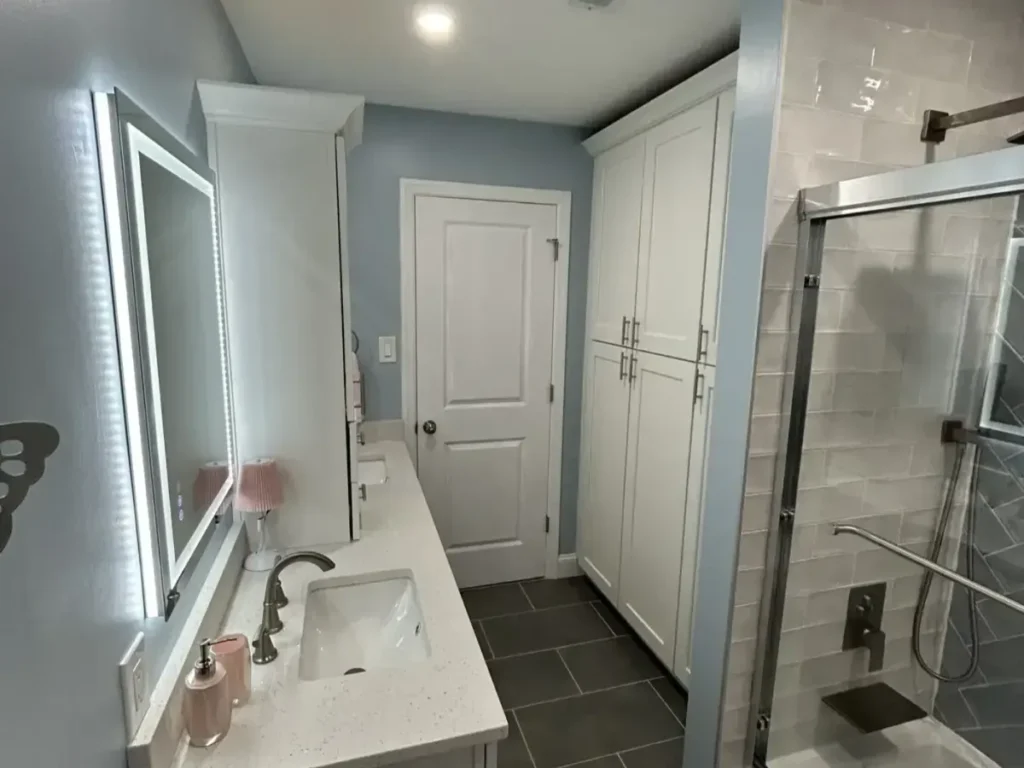
Porcelain tile is the answer for most bathrooms, and it is not close. But budget, comfort underfoot and whether you want heated floors can move the decision, so here is the full comparison.
Water Resistance Decides It First
Porcelain tile is the best bathroom flooring for most homes. It is close to waterproof, it lasts decades, it carries radiant heat better than anything else, and a damaged piece can be replaced without pulling up the whole floor.
That said, luxury vinyl plank is a legitimate second choice, and in a rental or a basement half bath it may be the smarter one. The right bathroom flooring depends on how much water the floor sees, whether you want it warm underfoot, and how long you plan to keep the house.
Why Porcelain Tile Wins Most Bathrooms
Porcelain is fired denser than ceramic, which is why it absorbs almost no water. Standing water from a shower splash or an overflowing tub sits on top of it instead of soaking in.
It handles the wet zone
Around a tub, in front of a shower and beside a toilet are the three places a floor fails. Porcelain paired with a proper membrane handles all three.
It carries heat
Ceramic and porcelain are the standard covering over radiant floor heat because they conduct heat well and hold it. Vinyl and carpet insulate the floor instead, which cuts what the system delivers to the room.
It is repairable
Crack one tile and a good installer swaps that tile. Damage a sheet-vinyl floor and the repair is a seam you will always see.
The trade-offs are real. Tile is cold without heat under it, it is hard on dropped glassware, and grout lines need sealing every few years to stay clean.
Grout is also where most tile complaints start. Choosing a mid-tone grout instead of bright white, and a slightly wider joint on a textured tile, cuts the cleaning burden more than any sealer does.
Large-format porcelain in a wood-look plank is the current favorite for good reason. You get the warmth of a wood floor with the water performance of tile, and there is no seam for water to find.
How the Materials Compare Head to Head
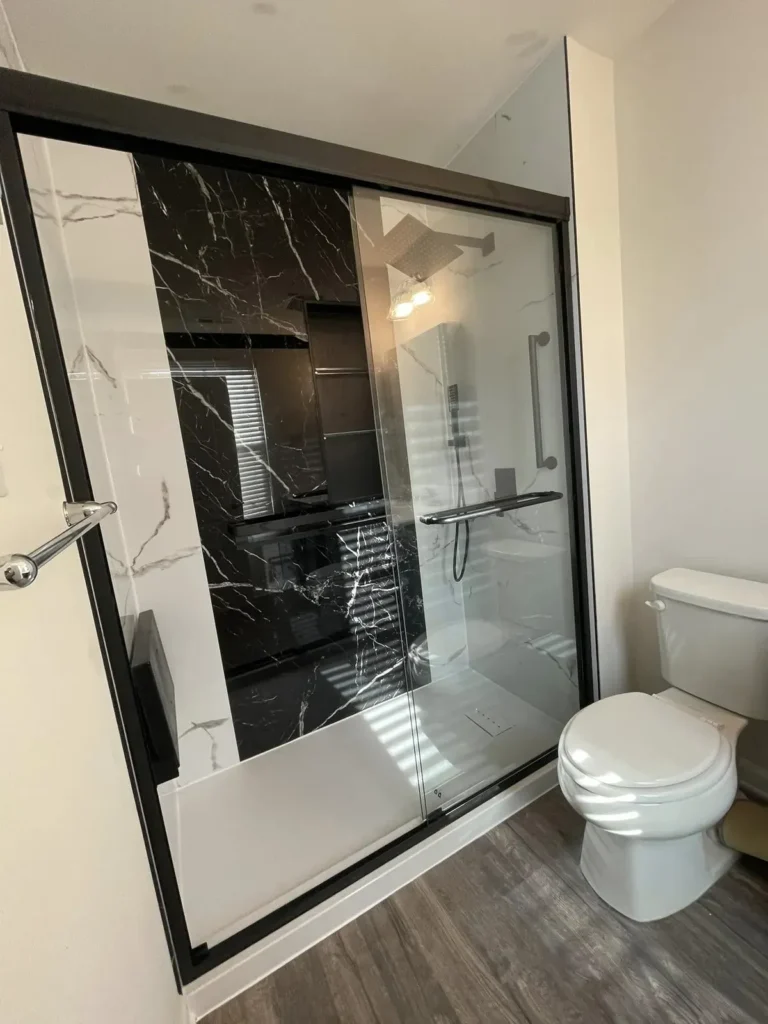
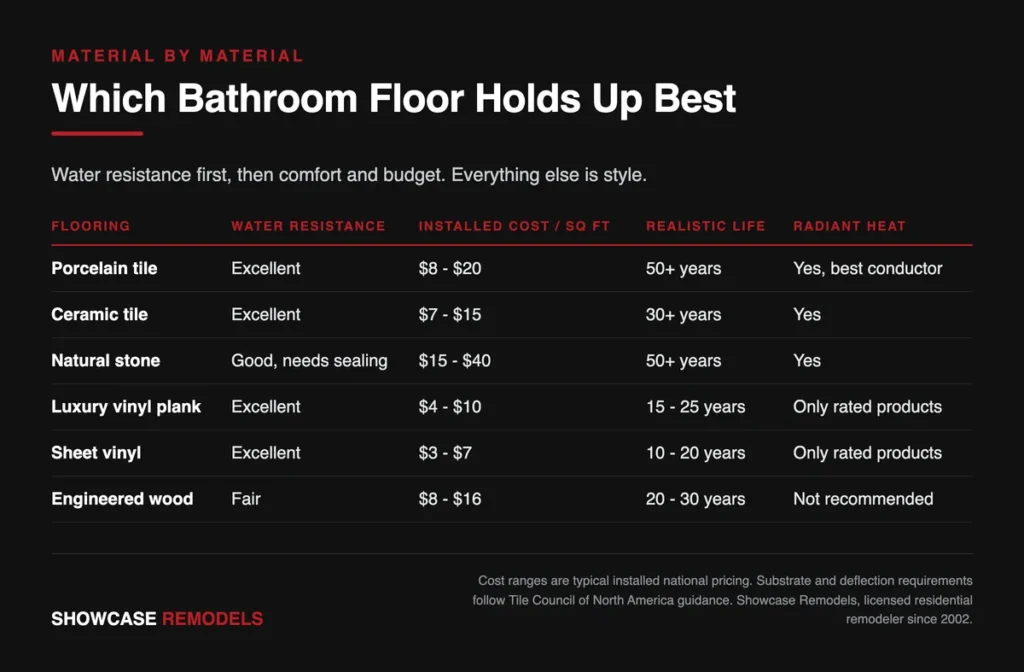
Five materials cover almost every bathroom floor installed today. Ranked by how they hold up to water, the order is porcelain, ceramic, vinyl, natural stone, then wood.
Luxury vinyl plank
Waterproof, warm underfoot, quiet, and the cheapest way to get a wood look in a wet room. It dents under heavy fixtures and cannot be refinished, so plan on replacing it rather than restoring it.
Natural stone
Beautiful and long-lived, but marble and limestone are porous. They need sealing on a schedule and they stain from the same products you keep under the sink.
Engineered and solid wood
Not a bathroom material. Even engineered wood swells at the seams once water gets under it, and a hall bath used by kids will find that out quickly.
Whatever you pick, the substrate underneath matters more than the material on top. The Tile Council of North America’s guidance on floor deflection explains why a floor that flexes will crack tile and grout no matter how good the installation is, which is the single most common cause of a failed bathroom floor.
Ceramic tile
A little softer and a little cheaper than porcelain, and perfectly fine on a bathroom floor that does not take heavy traffic. It chips more easily at the edges during installation.
Cost per square foot is the wrong way to compare these. A vinyl floor replaced twice in twenty-five years costs more than a porcelain floor installed once, and the second install means tearing the room apart again.
What Actually Makes a Bathroom Floor Fail
In our experience the floor material is rarely the problem. The layer under it is. Showcase Remodels pulls up plenty of tile that was set straight onto a bouncy subfloor with no membrane and no crack isolation, and it cracked exactly where you would expect.
Older homes make that worse. Joist spacing and subfloor thickness in a house built decades ago were never meant for large-format tile, so the floor needs stiffening before a single sheet of backer board goes down.
Waterproofing matters at the floor too, not only in the shower. Bonded membranes meeting ANSI A118.10, the standard published through the Tile Council of North America, are what keep a splash at the tub from finding the framing below.
Traction is the other thing worth planning for. Most bathroom injuries happen in and around the tub and shower, according to CDC injury data, so the floor in front of the shower is the wrong place for a polished surface.
One practical tip: pick a tile with texture or a smaller format near the shower. A polished large-format tile looks incredible dry and behaves like ice wet.
The second most common failure is the threshold at the door. If the new floor sits higher than the hallway and nobody planned for it, you end up with a lip that catches toes and a door that has to be trimmed.
Both of those are planning problems, not material problems. That is why the floor gets designed at the same time as the layout instead of picked from a sample board at the end.
Choosing the Right Floor for Your Bathroom
Primary bathroom
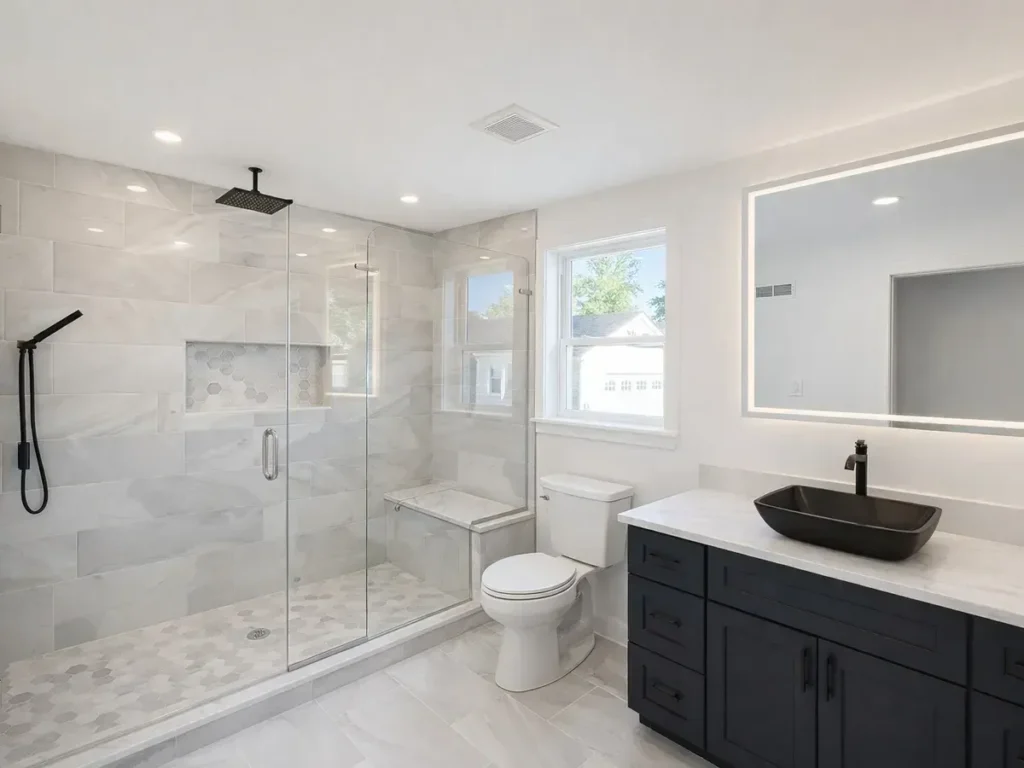
Porcelain, with radiant heat under it if the floor is coming up anyway. This is the room where the warm floor gets used every day.
Hall or kids' bathroom
Porcelain or a good luxury vinyl plank. Durability and easy cleanup beat the showpiece material here.
Powder room
Anything goes. There is no shower, so this is the one bathroom where a dramatic tile or a patterned floor is low risk.
Format and layout change how big the room feels, and our guide to the best tile size and layout for a bathroom covers that in detail. If you are tiling the shower in the same project, the best tile for a bathroom shower is a different question with a different answer, and what heated bathroom floors cost is worth pricing before the subfloor is closed up.
Whatever you pick, buy about ten percent extra and store it. Tile runs get discontinued, and having a few spare pieces in the basement turns a future repair into an afternoon instead of a whole new floor.
Frequently Asked Questions
The planks are. The seams and the perimeter are the weak point, so it needs a proper underlayment and sealed edges at the tub and toilet. Done right it holds up well in a hall bath.
Tile and stone are the best conductors and the safest choice. Some vinyl products are rated for radiant heat, but you must confirm the temperature limit with the manufacturer before installing.
Installed pricing usually runs from about four dollars per square foot for sheet vinyl to forty for natural stone. Call Showcase Remodels at 215-515-6484 for a real number on your room and subfloor.
Get the Subfloor Right, Then the Tile
Showcase Remodels has installed bathroom floors in homes of every era since 2002. We check the subfloor and the deflection before we quote a tile, because that is the part that decides whether the floor lasts twenty years or two.
