



YOUR TRUSTED HOME REMODELING COMPANY IN PHILADELPHIA

Kitchen Tile Flooring Installation in Philadelphia, PA

Durable, waterproof kitchen floors that hold up to spills, dropped pans, and decades of daily use. We install porcelain, ceramic, and natural stone tile in Philadelphia homes.

Facebook, Google, Yelp & BBB

4.9 & A+ Rating

5-star rating icons

Based on over 270+ reviews

Get In Touch With Us

Enter your contact information below

Modern kitchen with large-format tile floor in a Philadelphia home

Built-to-Last Kitchen Tile Floors for Philadelphia

Tile is the most durable kitchen flooring you can buy. Done right, a porcelain or stone floor lasts 30 to 50 years with almost no upkeep. Done wrong, it cracks, lifts, and stains within the first few seasons.

Showcase Remodels Philadelphia has been installing tile floors in row homes, twins, and single-family homes across Fishtown, Northern Liberties, Roxborough, and Mount Airy since 2002. Tile floors are a core part of our kitchen remodeling services.

Whether you want classic ceramic, large-format porcelain, or natural stone, we handle subfloor prep, layout, cutting, grout, and finish trim from start to finish. Call 215-515-6484 to get a free in-home measure.

Porcelain, Ceramic, and Natural Stone Kitchen Tile

The three main tile materials each have a real role in a kitchen. The right pick depends on your budget, your foot traffic, and how much daily cleaning you want to do.

Porcelain Tile

Porcelain is the most popular choice for kitchens. It fires at a higher temperature than ceramic, so it absorbs less water and resists cracking better. We recommend porcelain for any kitchen with kids, pets, or heavy foot traffic.

Ceramic Tile

Ceramic costs less than porcelain and works well for kitchens that see lighter use. It is easier to cut, which lowers the install time. Ceramic still needs sealing along grout lines but performs well in dry, controlled conditions.

Natural Stone

Slate, travertine, marble, and limestone bring real character to a kitchen floor. Each tile is unique. Stone needs sealing once a year and can stain from oil or wine if spills sit too long. We install stone when homeowners want the look and accept the upkeep.

Slip Resistance

Kitchens get wet. We choose tiles with a DCOF rating of 0.42 or higher for kitchen floors. A textured surface keeps families and guests on their feet near the sink and stove.

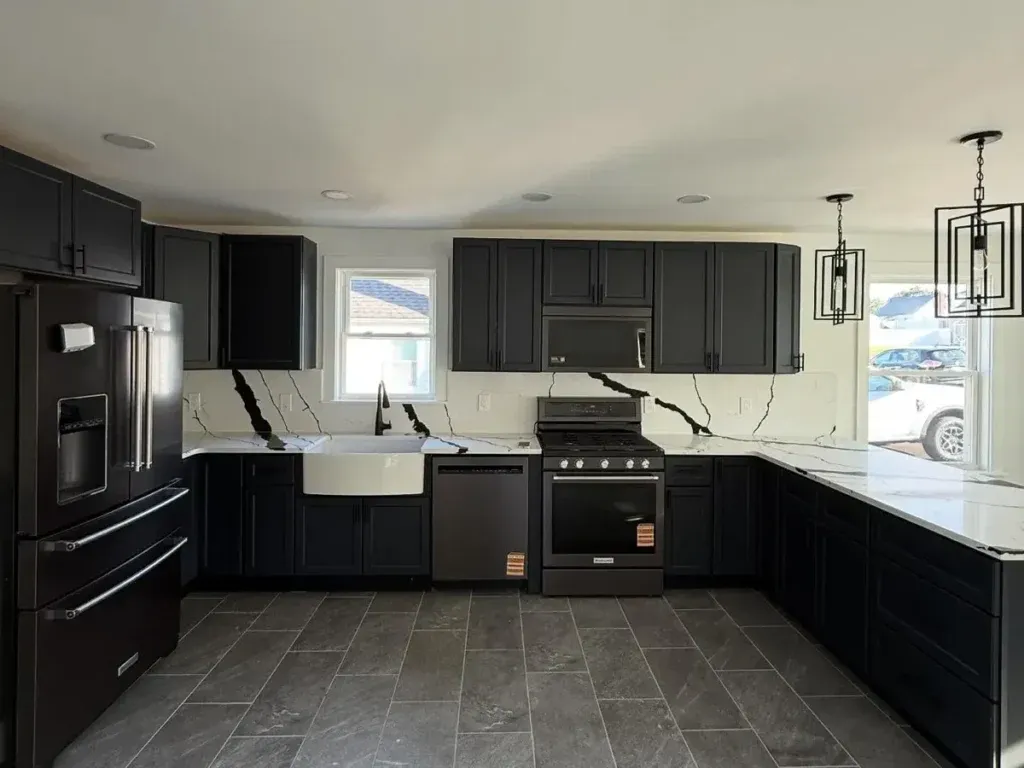
Kitchen with porcelain tile floor and quartz countertop in Philadelphia

Subfloor Prep and Why It Matters in Older Homes

The number one reason tile floors crack is a bad subfloor. Many Philadelphia row homes have original wood subfloors that flex, slope, or hide damage from leaks. We inspect every subfloor before laying a single tile.

Tile needs a stiff base. Industry standard for tile floors is an L/360 deflection rating, which means the floor cannot flex more than the span length divided by 360 under load. Old plank subfloors often fail this test. We add cement backer board or an uncoupling membrane to bring the floor up to spec.

We also check for level. A floor that slopes more than a quarter inch over ten feet will throw off the tile pattern and crack grout lines. We use self-leveling underlayment when the subfloor needs correction.

Water damage gets repaired before any tile work. Old leaks around dishwashers and sinks rot the subfloor underneath. We cut out and replace the damaged section, then re-sheet the area with proper-grade plywood.

Once the prep is done, we lay tile in a pattern that minimizes waste and hides any wall that runs out of square. This step matters most in row homes where original walls rarely meet at perfect 90-degree corners.

Grout Selection, Expansion Joints, and Room Transitions

The tile gets most of the attention, but grout and transitions decide whether a floor still looks new in five years. These small details separate a clean install from a callback.

Grout Color and Type

We use epoxy grout in kitchens whenever the budget allows. Epoxy resists stains, does not need sealing, and holds its color over time. Cement grout works fine when sealed properly but stains faster from coffee, wine, and oil drips.

Grout Joint Width

Tile size sets the joint width. Large-format porcelain takes a 1/8 to 3/16 inch joint, while smaller field tile takes 1/8 to 1/4 inch. Tighter joints look modern, and wider joints hide minor tile variation.

Expansion Joints

Room Transitions

Where tile meets hardwood, vinyl, or carpet, we install a metal or wood T-bar. The bar covers the height difference and protects both edges. For curbless transitions, we use a slim flush profile that lets a vacuum or wheelchair pass without catching.

Tile floors need expansion joints at every wall, doorway, and column. We use a flexible silicone caulk in matching grout color so the joints blend in. Skipping this step cracks tile when the building shifts.

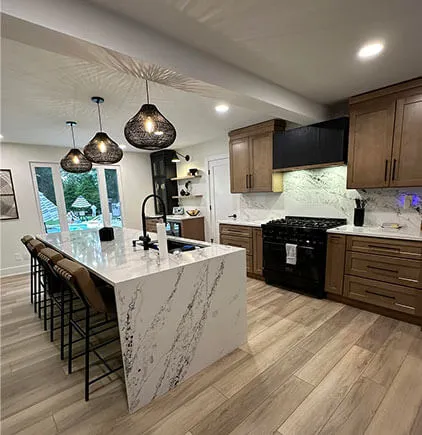
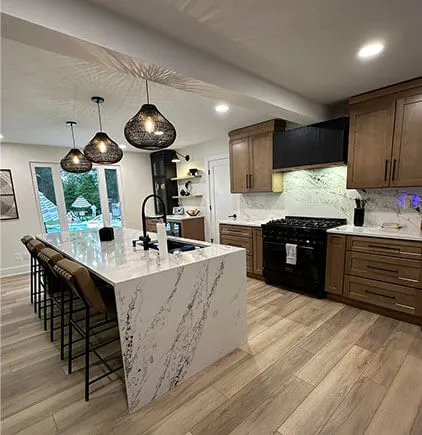
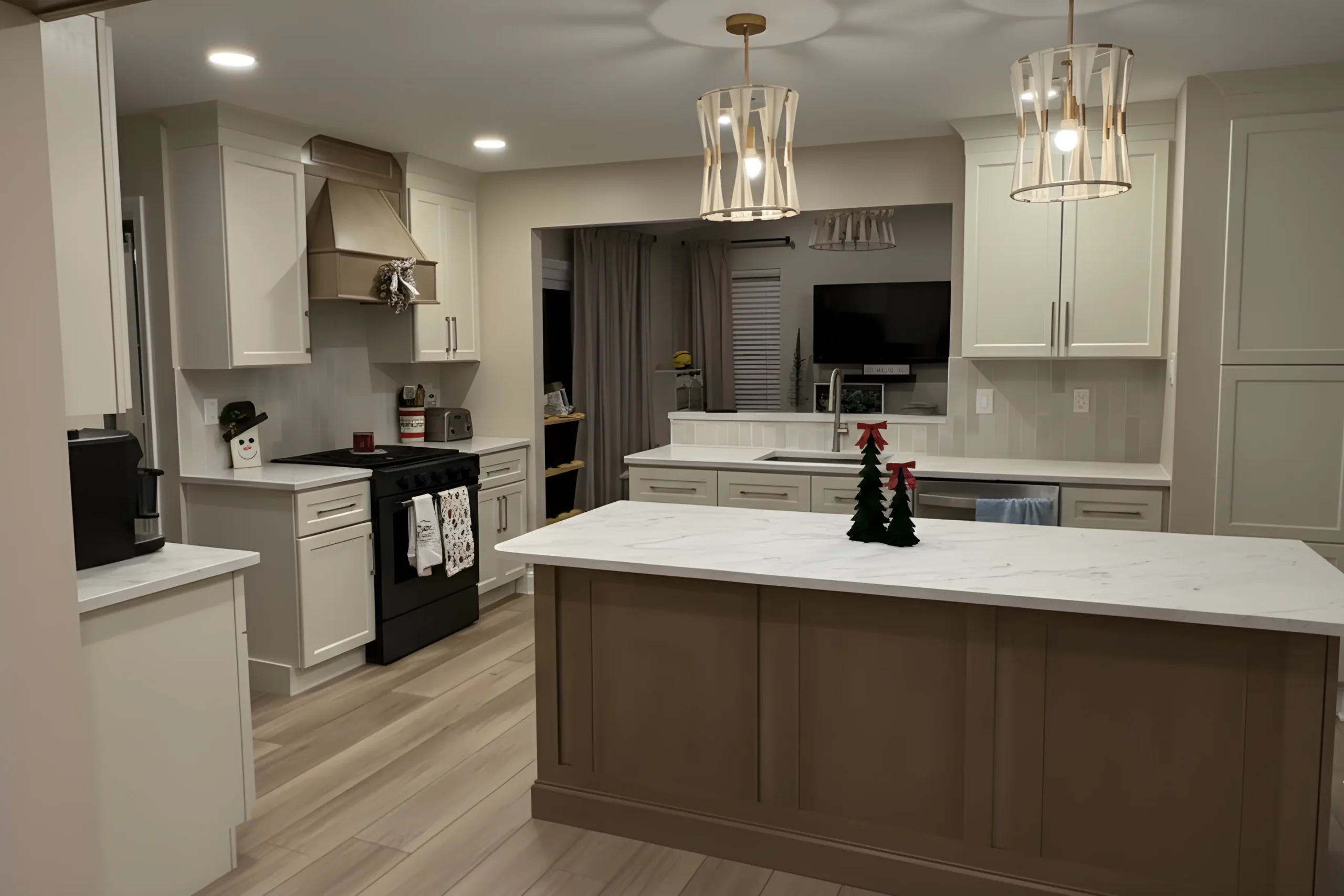
Kitchen island over tile floor with island pendant lighting in Philadelphia

Ready for a Tile Floor That Lasts 30 Years?

Call Showcase Remodels Philadelphia at 215-515-6484 or fill out our online form. We will visit your home, inspect your subfloor, and walk you through the tile options that fit your kitchen and your budget.

Why Choose Showcase Remodels for Kitchen Tile Flooring in Philadelphia

We are a licensed general contractor serving Philadelphia and South Jersey since 2002. Our team installs tile in over 100 kitchens a year. We bring the right tools, the right materials, and the right prep to every job.

Showcase Remodels holds NJ general contractor license #13VH04055000. We pull permits with the Philadelphia Department of Licenses and Inspections on every project that needs one.

More than 350 Philadelphia homeowners have rated our work 4.9 stars across Google and Houzz. The Better Business Bureau rates us A+ for fast issue resolution and quality follow-through.

Our tile installers follow Tile Council of North America standards on every job. That covers subfloor prep, mortar coverage, grout joint width, and expansion joint spacing. The result is a floor built to spec, not to guesswork.

Tile work creates dust. We tape off doorways with plastic, run a HEPA vacuum during cuts, and clean the work area every night. Your kitchen gets back to normal faster, even during demo.

Every tile project starts with a free in-home visit. We measure the kitchen, inspect the existing subfloor, and show you tile samples in the lighting of your actual home. Color and pattern read differently in your kitchen than in a showroom, so we bring the samples to you.

Frequently Asked Questions About Kitchen Tile Flooring Installation in Philadelphia

Showcase Remodels Philadelphia team after completing a kitchen tile floor installation

Most kitchen tile installs take four to seven working days. The schedule covers subfloor prep on day one, layout and tile setting over two to three days, then grout, caulk, and trim. Heated floors and natural stone add a day or two to the timeline.

Sometimes. Tile can go over a sound concrete slab or a stiff plywood subfloor with proper backer board. We do not tile over existing vinyl, hardwood, or floors with any soft spots. We inspect every subfloor before quoting a tile-over install.

Yes. Electric radiant heat is a popular add-on for our Philadelphia clients, especially in older row homes where the kitchen sits over an unheated basement. We install the mat, wire the thermostat, and pull any required permits. Call 215-515-6484 to start your project.

Related Kitchen Services in Philadelphia

New Kitchen Look Without the Full Replacement Price Your kitchen cabinets take up more visual space than any other element …

Professional Kitchen Countertop Installation in Philadelphia Showcase Remodels Philadelphia provides expert kitchen countertop installation services across Philadelphia. Whether you are …
Professional Kitchen Design in Philadelphia Showcase Remodels Philadelphia provides expert kitchen design services across Philadelphia. Whether you are updating a …

Scroll to Top