







The loudest part of a remodel is also the shortest. Here is what happens, step by step.
The First Step Toward a New Bathroom
During bathroom demolition, the crew protects your home, shuts off water and power, and removes fixtures. Then they tear out tile and walls, haul away debris, and inspect what is behind the old finishes. It is loud and dusty, but for most bathrooms it is also the shortest stage.
Demolition also reveals the true condition of the room. In Philadelphia’s older homes, that often means old pipes, soft subfloor, or layers of past repairs. Handling those finds well is a big part of any bathroom renovation in Philadelphia.
This guide covers each step of demolition, the safety rules for older homes, the surprises to expect, and how to plan your day around the work.
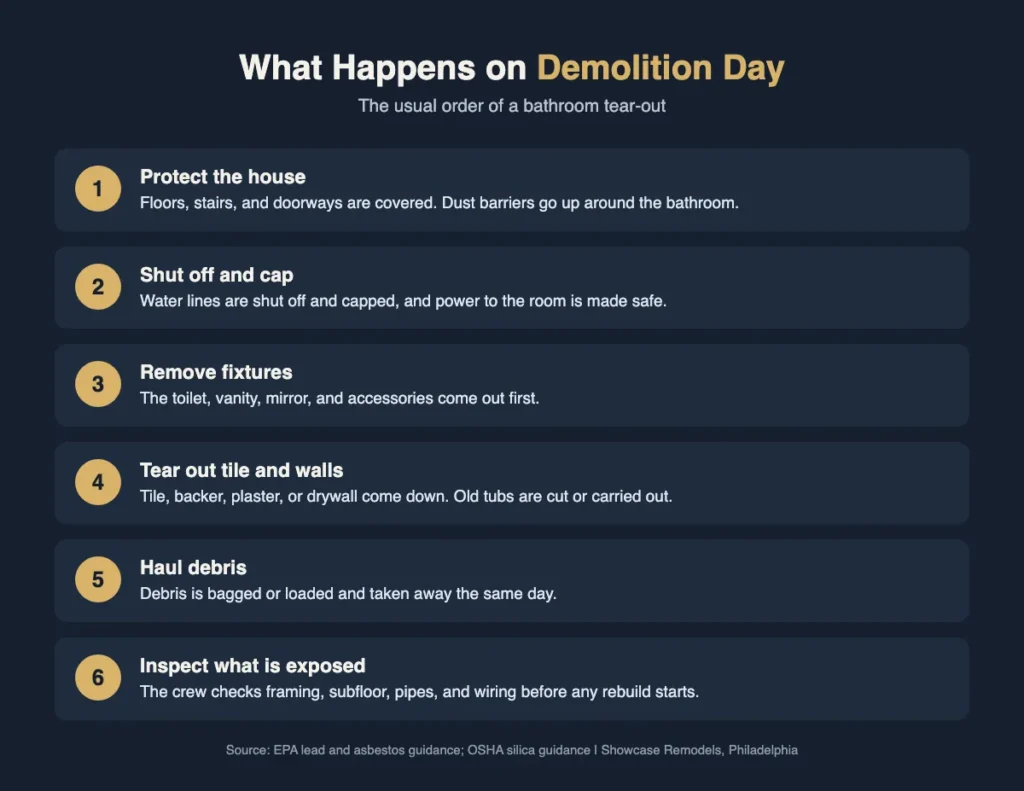
What Happens Step by Step During Bathroom Demolition?
Every job is a little different, but most tear-outs follow the same order.
Protection Comes First
Floors, stairs, and railings along the path are covered. Plastic barriers go up at the bathroom door to hold dust in.
Water and Power Are Made Safe
The crew shuts off water to the room and caps the lines. Circuits in the work area are turned off so walls can be opened safely.
Fixtures Come Out
The toilet, vanity, mirror, lights, and accessories are removed. Anything you want to keep should be pointed out before this step.
Tile, Walls, and the Tub Come Down
Tile and backer board are broken out. Plaster or drywall is removed where the plan calls for it. A cast iron tub may be broken into pieces to get it down narrow stairs.
Debris Leaves the House
Bags and pieces are carried out and hauled away so the home does not become a staging area.
The Room Is Inspected
With the walls and floor open, the crew checks framing, subfloor, drains, supply lines, and wiring before rebuilding.
How Is Demolition Kept Safe in Older Homes?
Older homes can hold materials that need careful handling when they are broken up. A professional crew plans for them before the first swing.
Lead Paint
Many older walls and trim carry lead-based paint under newer coats.
The EPA lead renovation rule requires anyone paid to disturb painted surfaces in homes built before 1978 to be certified and to follow lead-safe work practices. Those practices focus on containing dust and cleaning it up properly.
Asbestos
Old floor tile, adhesive, and pipe wrap can contain asbestos.
The EPA asbestos guidance warns against sanding, scraping, or breaking suspect materials and recommends testing by an accredited professional before remodeling.
Silica Dust
Cutting and breaking tile, mortar, and concrete creates fine dust.
The OSHA silica dust guidance explains that respirable crystalline silica is created when stone, concrete, brick, and mortar are cut, drilled, or crushed. Crews control it with water, vacuums, and proper masks.
What Surprises Show Up in Philadelphia Bathrooms?
Most Philadelphia homes were built long before modern bathrooms. When the walls open, the house tells its own story.
Mortar Bed Floors and Walls
Older bathrooms often have tile set in a thick bed of mortar. It is heavy and slow to remove, and it can hide the true floor height.
Soft or Patched Subfloor
Years of small leaks around the toilet and tub can rot the wood below. That wood must be fixed before new tile goes down.
Old Drains and Supply Lines
Cast iron drains and galvanized supply pipe are common. Some are fine, while others are near the end of their life.
Wiring and Framing
Old wiring, notched joists, or missing blocking may need attention while everything is open.
Permits may need an update when the scope grows. The City of Philadelphia building permit guide lists partial demolition of a structure among the projects that need a building permit.
A Northeast Philadelphia homeowner wrote that our team was very clean, put drop cloths down, and did everything the sales rep promised. Showcase Remodels runs demolition the same way on every job, with protection first and a clear talk about anything found behind the walls.
How Should You Plan Your Day Around Demolition?
Demolition is the one stage where being out of the house can make sense. The noise is steady and the dust barrier limits the rest of the home.
Work From Somewhere Else
If you work from home, plan a quiet spot away from the bathroom or a day out. Pets often do better away from the noise.
Keep the Path Clear
The crew will carry debris through your hall and front door. Keep kids, pets, and packages out of that path.
Stay Reachable
If the crew finds rot, old pipes, or hidden damage, they will want your answer quickly so work can keep moving.
Ask About the Plan for Findings
Before demolition starts, ask how hidden problems will be priced and approved. A clear answer now avoids stress later.
Get ready ahead of time with our guide on how to prepare your Philadelphia home for a bathroom remodel. If walls or plumbing will change, read how bathroom permits and inspections work in Philadelphia. For the full timeline, see how long a bathroom remodel takes.
Bathroom Demolition Questions
Yes, but expect loud noise and some dust in the hallway. Many people plan to be out for the heaviest part of the day. Dust barriers keep most of the mess inside the bathroom.
It is possible, but older Philadelphia homes can contain lead paint or asbestos. Breaking those materials without proper controls is a real health risk. Hidden pipes and wires also make DIY demolition risky.
A good contractor stops, shows you the problem, and explains the fix and the cost before continuing. Rot, old drains, and damaged framing are common in older homes.
Start Your Philadelphia Bathroom Renovation the Right Way
Showcase Remodels handles bathroom demolition with protection first and clear communication about every finding. Call for a free design consultation.
