







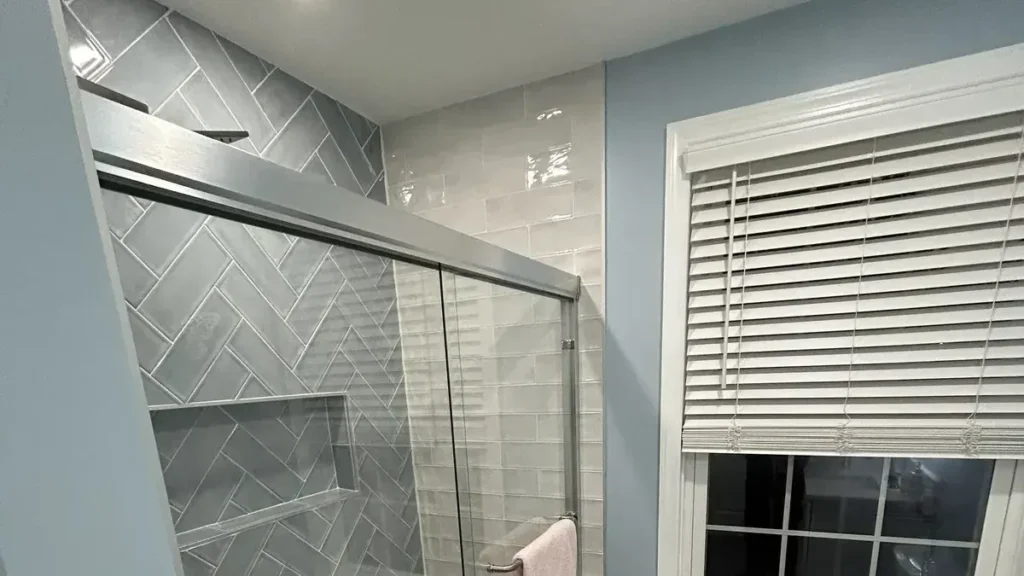
Old tile is rarely made anymore. Here is how to find the closest match, stay safe with older materials, and make new tile look like it belongs.
Matching Old Tile Starts With a Plan
To match new tile to old tile, find a leftover piece, measure its size, thickness and finish, and compare samples in person. If no exact match exists, blend the new tile in with a border or redo a full surface so the change looks planned. Professional tile installation makes that blend look clean.
Below we cover how to find a match, the safety checks older homes need, and your options when the old tile is gone for good.
How Do You Find Tile That Matches Old Tile?
Start at home before you start shopping. Past owners often left spare boxes in the basement, the attic or under the stairs.
Measure everything
Record the tile size, thickness and shape, and the width of the grout lines. Older tile often has sizes that do not match modern standard sizes, so a close match on paper can still look off on the wall.
Bring a real piece
Color photos rarely match in the store. Carefully remove a broken or loose tile, or one from behind a toilet tank, and bring it with you.
Check the finish and edges
Glossy, matte and crackle glazes read very differently side by side. Look at the edges too, since older tiles often have softer, rounded edges.
Look at salvage sources
Architectural salvage shops sometimes carry reclaimed tile from older homes. It is worth a look for classic hex, penny and subway styles.
Match the grout, not just the tile
Grout color changes how tile looks. Old grout has often darkened with age, so a new tile set with bright white grout can stand out even if the tile itself matches. Ask about grout color samples too.
If you find a close match, buy extra. Keep a spare box in the basement for future repairs, so the next owner does not face the same hunt.
Take your measurements and photos to more than one supplier. Different shops carry different lines, and a specialty tile store may find a closer color or size than a big box store.
Safety Checks Before You Remove Old Tile
Older homes can hide materials that need testing before anyone cuts, sands or pulls them up.
Asbestos
The EPA’s asbestos guidance lists vinyl floor tile, the backing on vinyl sheet flooring, and adhesives as materials that may contain asbestos in older homes. The EPA recommends testing suspect material before a renovation disturbs it.
Lead paint
Homes built before 1978 may have lead paint on walls and trim around the tile. Under the EPA Renovation, Repair and Painting rule, firms paid to disturb that paint must be certified and follow lead-safe practices.
If testing finds asbestos or lead, a certified professional handles removal before the tile work continues.
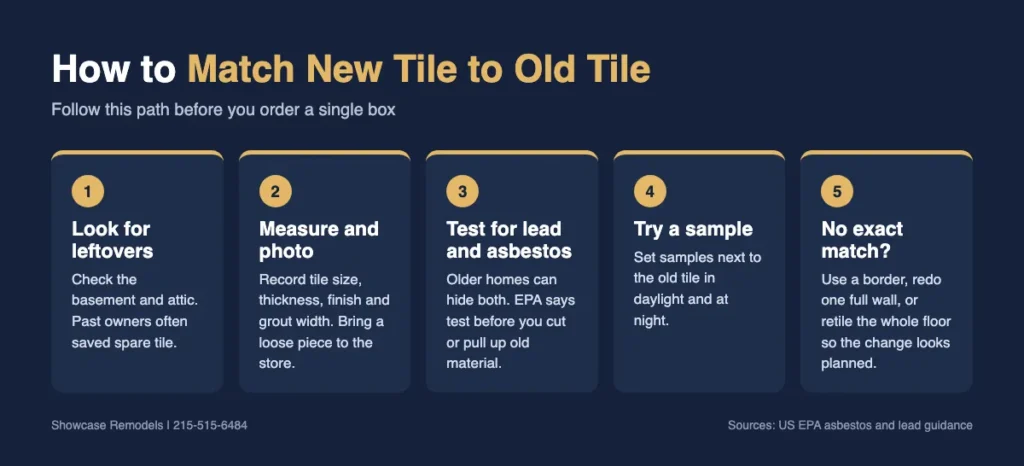
Testing adds a little time up front but protects your family and keeps the project from stopping halfway through. The chart below shows the full path from leftover tile to finished match.
What We See in Philadelphia Rowhome Bathrooms
Many Philadelphia rowhome bathrooms still have original or early tile, such as small hex floors, colored wall tile or narrow trim pieces. Those details are part of the home’s character, and homeowners often want to keep them.
The honest truth is that an exact match is rare. The better goal is a new surface that looks intentional next to the old one.
Across Philadelphia and nearby communities, Showcase Remodels completes 15 to 17 projects every day, many of them in classic rowhomes. That steady work in older houses is what helps our team spot tile, subfloor and trim details before they become problems.
Our free design consultation starts with a visit to your home and an honest assessment. That is when we look at the existing tile, talk through matching options, and finalize selections before work begins.
Some homeowners choose to save a vintage floor and update the walls, or the other way around. Keeping one original surface is a simple way to hold on to the home’s history.
Grout and setting materials have changed over the decades too. Older tile was often set in a thick mortar bed, while new tile usually goes on thinner backer board. A crew that knows both methods can make the height of new and old surfaces line up.
What to Do When You Cannot Find a Match
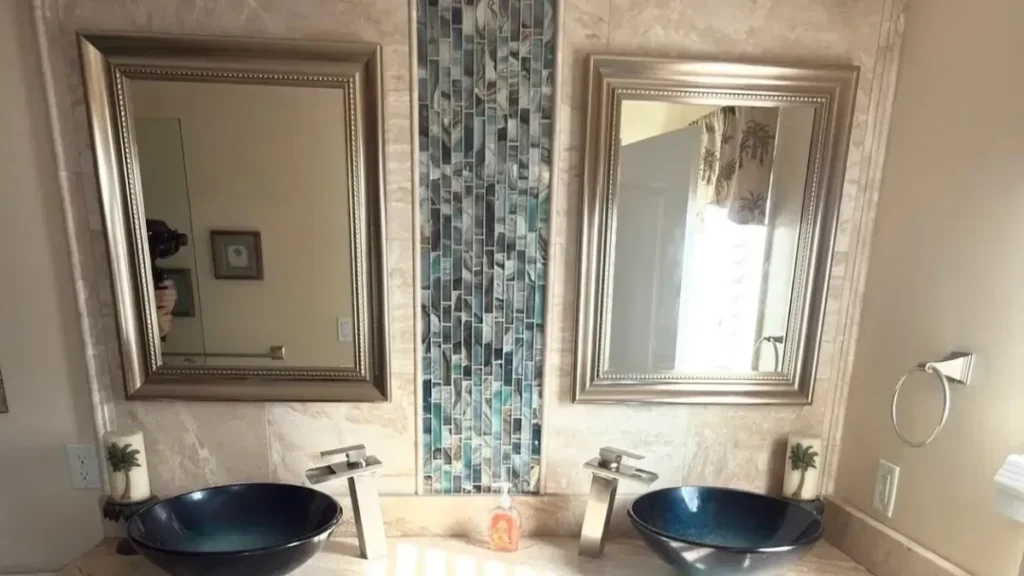
When no match exists, make the change look planned. A contrasting border or accent band can separate old tile from new.
Redo a whole surface instead of patching. Retiling one full wall or the entire floor avoids a spot that looks repaired.
Think about retiling the shower and keeping a vintage floor, or the reverse. Mixing old and new works when each surface is complete.
Pick a style that suits the home
Classic shapes like subway, hex and small square mosaics look right in older rowhomes. Choosing a timeless style for the new surface helps it sit comfortably next to original tile, even when the colors are not identical.
Whatever you choose, lay the new tile out on the floor before it goes on the wall. Seeing it next to the old tile in the room is the best way to know you will love the result.
For help picking new tile, read about the best tile size and layout for a bathroom and the best tile for a bathroom shower. If removing old tile reveals soft wood, see what happens if you find water damage mid-remodel.
Frequently Asked Questions
Yes, if you have matching spares and the tile around them is solid. Remove damaged pieces carefully to avoid cracking their neighbors. If the grout color no longer matches, a full regrout can tie it together. Keep any tiles you remove intact in case you need them later.
Whites vary by glaze, age and manufacturer. Old tile may also have yellowed slightly over time. Always compare samples next to the real tile in the room’s own light. A slightly warmer white often blends better with older tile.
If the tile or adhesive is old and the remodel will disturb it, testing is the safe choice. In older Philadelphia rowhomes this is a common step before demolition. A trained professional should take the sample.
Blend New Tile With Old Character
Showcase Remodels helps Philadelphia rowhome owners update tile while respecting the home’s character. Call us to book a free design consultation.
