







Hidden water damage is one of the most common surprises behind a bathroom wall. Here is what a good crew does next, and what it means for your budget and schedule.
Don't Panic, Pause the Work
If you find water damage mid-remodel, the work pauses. The damage gets found and fixed, and then the project picks back up. It adds time and money, but it is far cheaper to fix now than after new tile covers it. Our bathroom plumbing team sees this often in older homes.
This guide covers what happens when damage is found and how the fix works. It also explains the effect on cost and timing, and how to keep the surprise small.
What Happens When the Crew Finds Water Damage?
The crew stops and shows you the damage. Most water damage shows up the day the old tile, tub or vanity comes out. That is the first time anyone can see the studs, the subfloor and the pipes.
Step one: find the source
Before anything gets fixed, the crew traces where the water came from. The usual causes are a leaking drain, a loose supply line, a failed shower valve, or years of water sneaking through cracked grout.
Step two: measure how far it goes
Soft wood gets probed with a screwdriver. Dark stains get followed until the wood is solid again. The goal is to know the full size of the problem before quoting the fix.
Step three: put the change in writing
A good contractor writes up a change order. It lists the extra work, the added cost and the new finish date. Nothing should move forward until you sign it.
Step four: dry, cut out and rebuild
Wet framing and subfloor are dried or removed. New wood goes in, then new backer board and waterproofing. Only then does the original remodel plan start again.
What damage usually looks like
Water damage is not always dramatic. It can be dark, crumbly wood around the toilet flange, a black stain under the tub, or subfloor that flakes apart when touched. Sometimes the only sign is a musty smell that gets stronger once the wall is open.
Photos help everyone stay on the same page. Ask the crew to take pictures before and after the damaged material comes out. Those photos are useful for your records and for any insurance claim.
Why Fast Drying Keeps Mold Out of Your Walls
Speed matters because wet wood grows mold. The EPA’s guide to mold and moisture says wet materials dried within 24 to 48 hours will not grow mold in most cases.
That is why a crew should not close a wall over damp wood to stay on schedule. Moisture trapped behind new tile will keep feeding rot and mold for years.
Small leaks add up
Most mid-remodel damage starts with a slow drip nobody noticed. The EPA WaterSense Fix a Leak Week page says the average household’s leaks can waste more than 9,300 gallons of water a year. Some of that water ends up inside bathroom walls and floors.
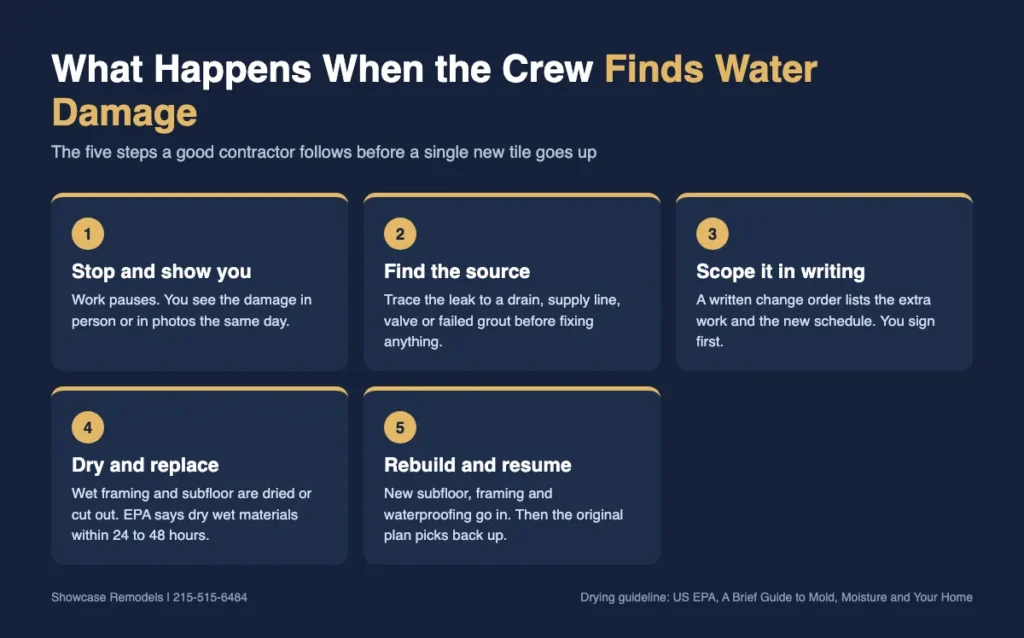
The chart below shows the order a careful crew follows from the moment damage is found.
Why Older Philadelphia Homes Hide More Damage
Older homes have had more years for small leaks to do their work. Many Philadelphia row homes have original drain lines, patched subfloors and several layers of old tile. Each one is a place for water to hide.
Showcase Remodels crews run 15 to 17 projects a day across Philadelphia and nearby communities, many of them in older homes. A homeowner in Northeast Philadelphia put it simply in a review: the team is very experienced with older homes. That experience matters most on demo day, when the wall opens and the plan has to adjust.
Our founder, Sam DeMaio, brought planning habits from his time in the Army and law enforcement. We map out timelines and backup plans before work begins, so a surprise behind the wall becomes a planned change, not a crisis.
What we look for before demo
Stains on the ceiling below the bathroom, loose floor tile, and a toilet that rocks are early clues. When we see them, we talk about possible repairs up front. The EPA mold course also recommends keeping indoor humidity below 60 percent, which is why a working exhaust fan belongs in every rebuilt bathroom.
Catching these clues early gives you time to plan the budget before demo day.
How to Keep a Water Damage Surprise Small
Set aside a contingency fund before work starts. Hidden damage is one of the most common reasons a remodel costs more than the first quote. Money you do not spend on repairs can go toward nicer finishes at the end.
Ask how the contractor handles change orders before you sign. You want written approval, clear pricing and a new finish date every time the scope changes.
Learn the warning signs early. Our guide to the signs you need a bathroom remodel covers soft floors and stains that point to trouble. If the fix means rerouting pipes, read whether you can move plumbing in a bathroom remodel to see what that involves.
Keep the rest of the house protected
Ask where the water will be shut off and for how long. Make sure the crew covers floors and stairs, and that a working shutoff valve is in place before new fixtures go in. A small upgrade now, like new valves, can prevent the next leak.
Finally, avoid the shortcuts that cause repeat damage. Skipping waterproofing or reusing an old drain are two of the bathroom remodel mistakes to avoid that lead straight back to rotted wood.
Frequently Asked Questions
It depends on your policy and the cause. Sudden leaks are more likely to be covered than slow damage that built up over years. Call your insurance agent before the damaged material is thrown away, and take photos first. Keep copies of the change order and invoices too.
A careful contractor will not. Covering wet or rotted wood traps moisture and invites mold. The damaged material should be dried or replaced before new work goes on top. Ask to see the repair before it is covered up.
It depends on how far the damage spreads and whether pipes need repair. A small patch of subfloor is a modest add. In older Philadelphia homes, damage that reaches the joists can take more time and budget, so ask for a written change order.
Get a Straight Answer About Hidden Damage
Showcase Remodels plans for surprises in Philadelphia homes before the first tile comes off. Call us for a free design consultation and a clear plan.
