







Protect the wall behind your sink and give your vanity a finished, custom look.
A Backsplash Does More Than Look Good
A bathroom backsplash is the tile or stone on the wall behind the sink. It protects that wall from daily splashes and ties the vanity into the room. The best choice depends on how much water hits the wall and the style you want.
In many Philadelphia homes, the wall behind the sink is old plaster or drywall that does not handle water well. A good backsplash stops that damage before it starts. We plan it together with every vanity installation in Philadelphia, so the counter, faucet, and tile all line up.
Below are the main backsplash styles, the materials that hold up best, the grout details that matter, and how to pick the right height for your bathroom.
What Are the Best Bathroom Backsplash Ideas?
Backsplash ideas fall into a few groups. Each one balances protection, cost, and style a little differently.
Short Stone Splash
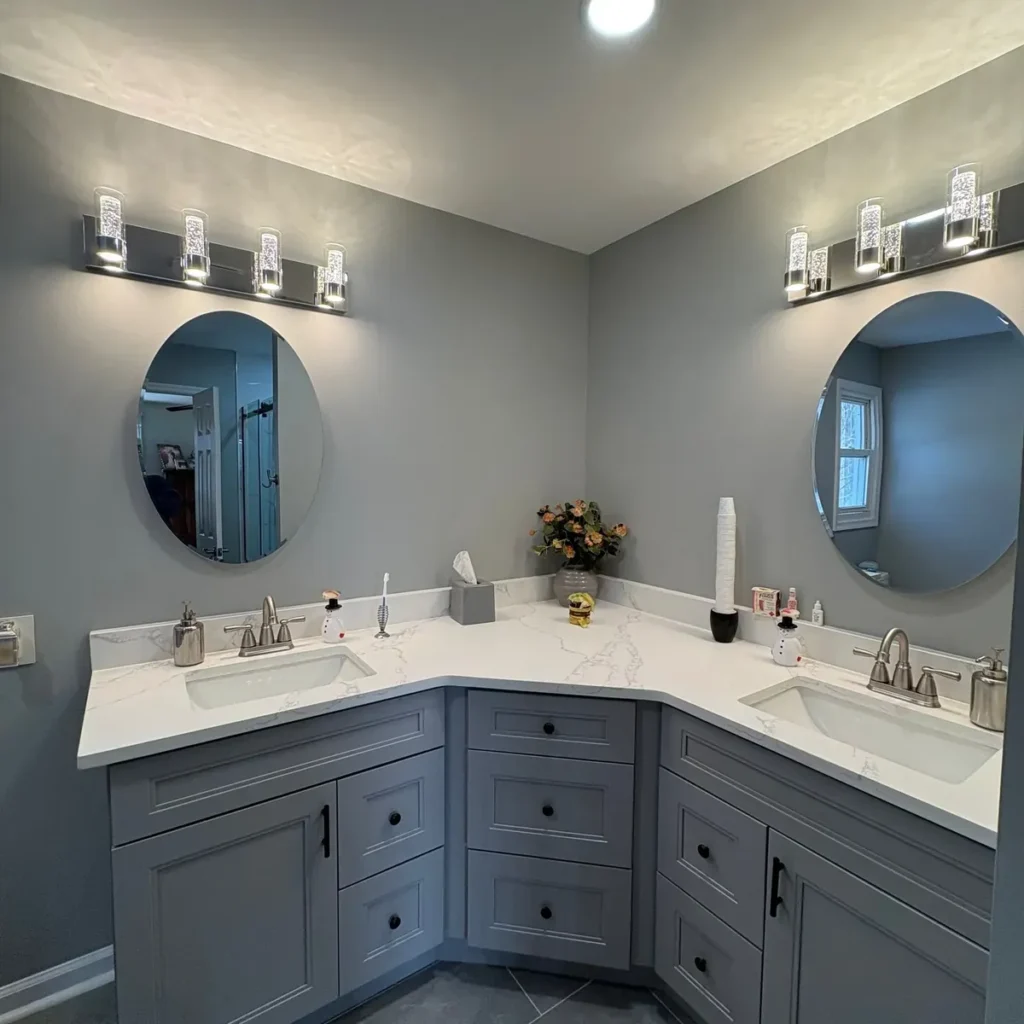
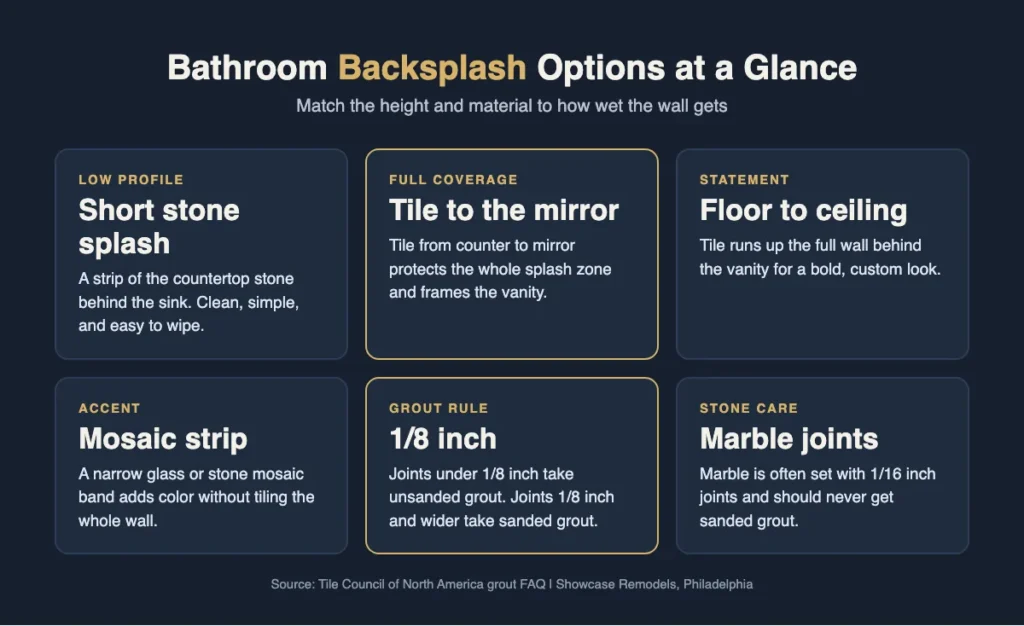
Many vanity tops come with a short strip of matching stone. It is the simplest option and very easy to wipe clean. It works well when the mirror sits close to the counter.
Tile to the Mirror
Tile that runs from the counter up to the bottom of the mirror covers the whole splash zone. It frames the vanity and looks finished.
Full Wall Tile
Running tile from the counter to the ceiling turns the vanity wall into a feature. Large format porcelain or a marble look tile keeps grout lines to a minimum.
Mosaic Accent Strip
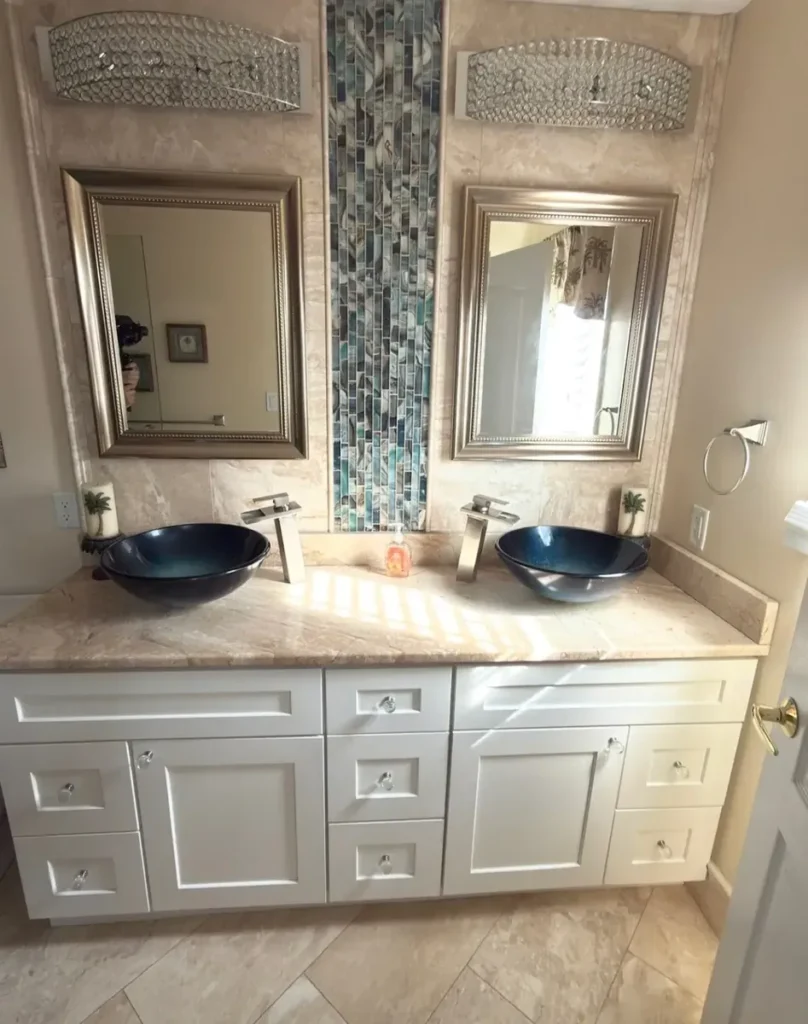
A narrow band of glass or stone mosaic adds color and texture without tiling the whole wall. It can run vertically between two mirrors or across the wall at counter height.
Subway and Stacked Tile
Classic subway tile suits older Philadelphia homes. Stacking it straight instead of offset gives a more modern look.
Which Backsplash Materials and Grout Hold Up Best?
A bathroom backsplash gets wet every day, so the material and the grout matter as much as the look.
Porcelain and Ceramic Tile
Both handle water well and come in almost any look. Porcelain is denser and a strong pick for busy family bathrooms.
Natural Stone
Marble and other stones look rich but need sealing and gentle cleaners. They scratch and etch more easily than porcelain.
Glass Mosaic
Glass does not absorb water and reflects light, which helps in a dim bathroom. The small pieces mean more grout to keep clean.
Grout choice follows the joint size. According to the Tile Council of North America, joints smaller than 1/8 inch should be grouted with unsanded grout, and joints 1/8 inch and larger with sanded grout. The same source notes marble is usually set with very tight joints and should never get sanded grout, which can scratch it.
Moisture control protects the whole wall. The EPA guide to mold and moisture advises fixing leaks fast and keeping indoor humidity below 60 percent. A sealed backsplash and a working fan both help.
What Backsplash Styles Suit Philadelphia Homes?
Philadelphia has everything from century-old rowhomes to newer twins and townhouses. The backsplash should respect the house as well as your taste.
Older Rowhomes
White subway tile, small hex tile, and simple marble fit the age of the house. Walls in older homes are often out of plumb, so tile needs a flat surface first. Skipping that step shows up as uneven grout lines.
Updated and Newer Homes
Large format tile, stacked patterns, and bold mosaic strips suit a cleaner, modern look. Fewer grout lines also mean less cleaning.
Plan Around the Outlet
Code requires at least one GFCI-protected outlet within 36 inches of the sink edge. The tile layout should be planned so the outlet lands neatly instead of splitting a tile in an awkward spot.
That outlet rule comes from the National Kitchen and Bath Association planning guidelines, which also recommend rounded or clipped counter corners in the bathroom.
Showcase Remodels has been remodeling bathrooms since 2002, and we plan backsplash tile, outlets, and mirrors on the same drawing. When those details are set before install, the finished wall looks clean and balanced.
How Do You Choose the Right Backsplash for Your Bathroom?
Start with how the sink gets used. A kids’ bathroom with lots of splashing needs more coverage than a powder room that sees light use.
Pick the Height
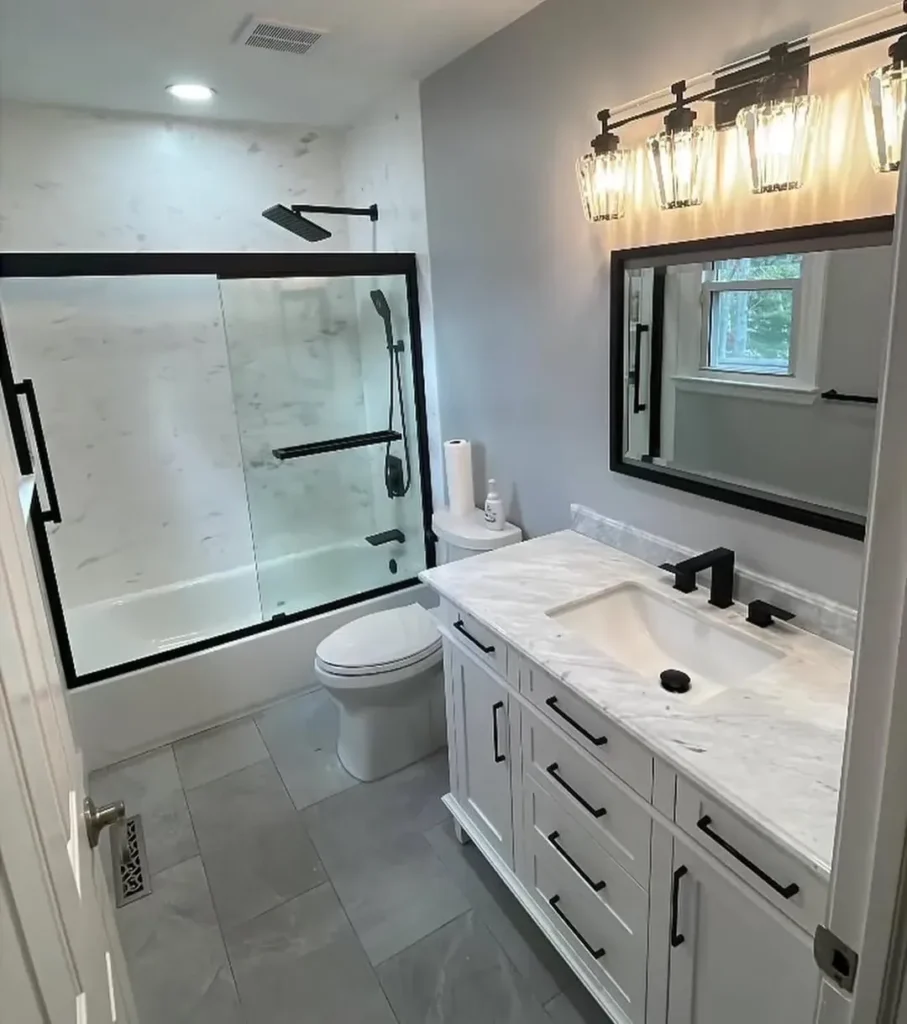
Choose a short splash for low use, tile to the mirror for most family bathrooms, and a full wall for a statement.
Pick the Material
Porcelain for durability, stone for a natural look, and glass for light and color.
Check the Grout Plan
Ask what grout and joint size your installer will use and how it will be sealed. Grout is the first thing to show wear.
If your current grout is already cracking, read the signs your bathroom needs grout repair. Planning the mirror too? See our bathroom mirror ideas for small Philadelphia bathrooms. For the counter itself, our post on the best vanity countertop compares the main options.
Bathroom Backsplash Questions
Most bathrooms should have one. Water from the faucet and hands lands on the wall behind the sink every day. Without protection, paint peels and drywall can soften over time.
A short splash is fine for light use. Tile to the bottom of the mirror is the most common height in family bathrooms. A full wall works when you want a bold look.
Large format porcelain or a solid stone splash is easiest because it has few or no grout lines. In busy Philadelphia family bathrooms, that means less scrubbing and fewer stains.
Design a Backsplash That Lasts
Showcase Remodels designs and installs bathroom backsplashes with the vanity, faucet, and mirror planned together across Philadelphia. Call for a free design consultation.
