







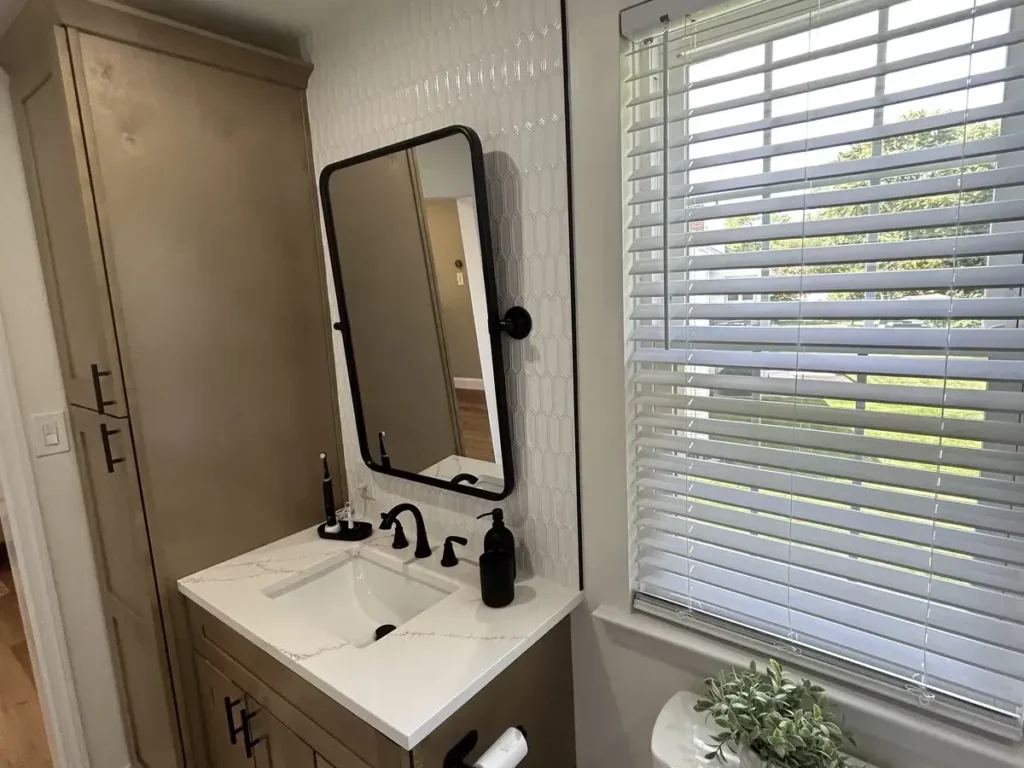
The right mirror can brighten a tight room, add storage, and make a small bathroom feel bigger.
Why the Mirror Matters More in a Small Room
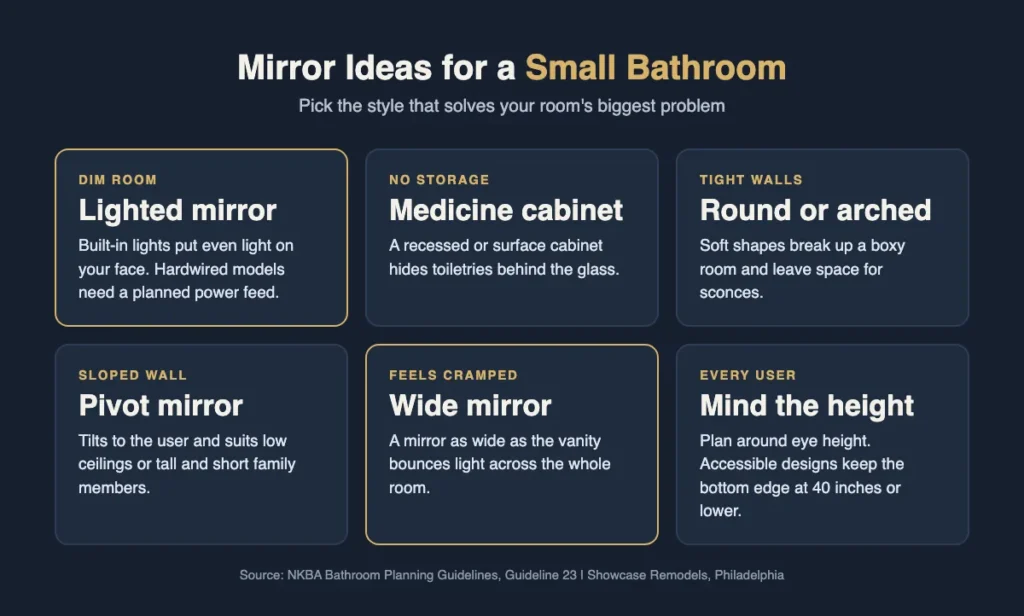
The best mirror for a small Philadelphia bathroom is one that solves the room’s main problem. That might be poor light, no storage, or walls that feel too close. Size, shape, and lighting all change how big the space feels.
Many city bathrooms are narrow, with one window or none at all. That makes the mirror one of the few tools that adds light and depth without moving a wall. It is a key design choice in every small bathroom remodel in Philadelphia we plan.
Below you will find the main mirror styles, the height and lighting rules that matter, and how to match a mirror to your vanity and storage needs.
Which Mirror Styles Work Best in Small Bathrooms?
Each style fits a different room. Start with the one that answers your biggest frustration.
Lighted Mirrors
LED mirrors spread light evenly across your face and cut shadows. They are a great fit when a single ceiling light leaves the vanity dim. Hardwired models need power planned behind the wall.
Medicine Cabinets
A mirrored cabinet adds hidden storage in a room that has almost none. A recessed cabinet sits inside the wall, so it does not crowd a narrow vanity.
Round and Arched Mirrors
Curves soften a boxy room. A round mirror also leaves wall space on each side for a pair of sconces.
Pivot Mirrors
A pivot mirror tilts to the person using it. It works well under sloped ceilings and in homes where family members are very different heights.
Wide Mirrors
A mirror that runs the full width of the vanity reflects the most light. It can make a small room feel noticeably wider.
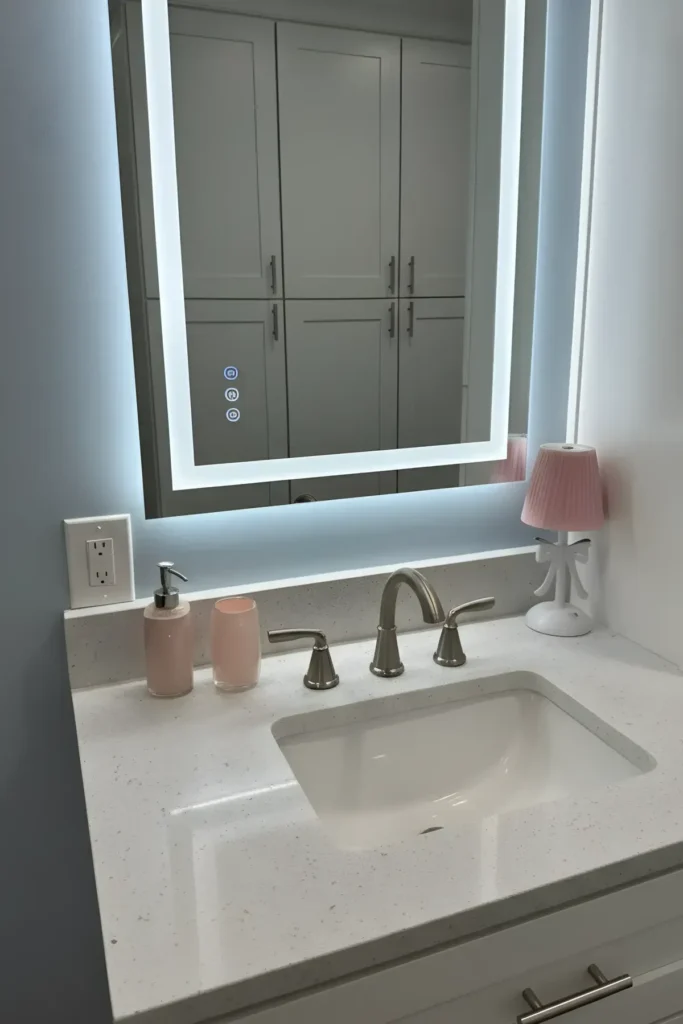
How High Should a Bathroom Mirror Hang?
There is no single number, because height depends on who uses the room. The National Kitchen and Bath Association planning guidelines recommend placing the mirror above or near the sink at a height that takes the user’s eye level into account.
Plan for Every User
For an accessible bathroom, the same guidelines suggest a full-height mirror or one with its bottom edge no more than 40 inches above the floor. That keeps a seated person or a child in view.
Leave Room for Light
The guidelines also call for task lighting beside the mirror at eye level, with the bulb out of direct view. Side lighting beats a single light overhead because it does not cast shadows under your eyes.
Keep Power Safe
Outlets near the sink must be protected by a ground fault circuit interrupter. At least one GFCI outlet must sit within 36 inches of the outside edge of the sink.
If a lighted mirror or new sconces need new wiring, that is electrical work. The City of Philadelphia electrical permit guide notes that replacing a light fixture in an existing spot counts as maintenance, while new wiring needs a permit.
What Works in a Narrow Philadelphia Rowhome Bathroom?
Rowhome bathrooms often run long and slim, with the vanity on the same wall as the toilet. In that layout, depth is more precious than width.
Choose Slim Over Deep
A mirror or a recessed cabinet that stays close to the wall keeps your head clear when you lean over the sink. A deep surface cabinet can feel like it is in your face.
Work Around the Window
Some rowhome baths put the only window over the vanity. A pair of narrow mirrors on each side of the window, or a mirror on a side wall, keeps the daylight.
Balance the Fixtures
Center the mirror on the faucet, not the wall. Off-center mirrors are easy to spot in a small room.
Use the Door Wall Too
A tall mirror on the back of the door or on the wall facing the vanity doubles the light from a single fixture. It also gives you a full-length view without taking up any floor space.
Think About Fog
Small bathrooms steam up fast. Some lighted mirrors include a built-in defogger, and a properly sized exhaust fan clears the glass even faster.
Showcase Remodels has been remodeling bathrooms since 2002, and we plan the mirror, light, and outlet locations together. When those three are drawn at the same time, the finished wall looks calm instead of cluttered.
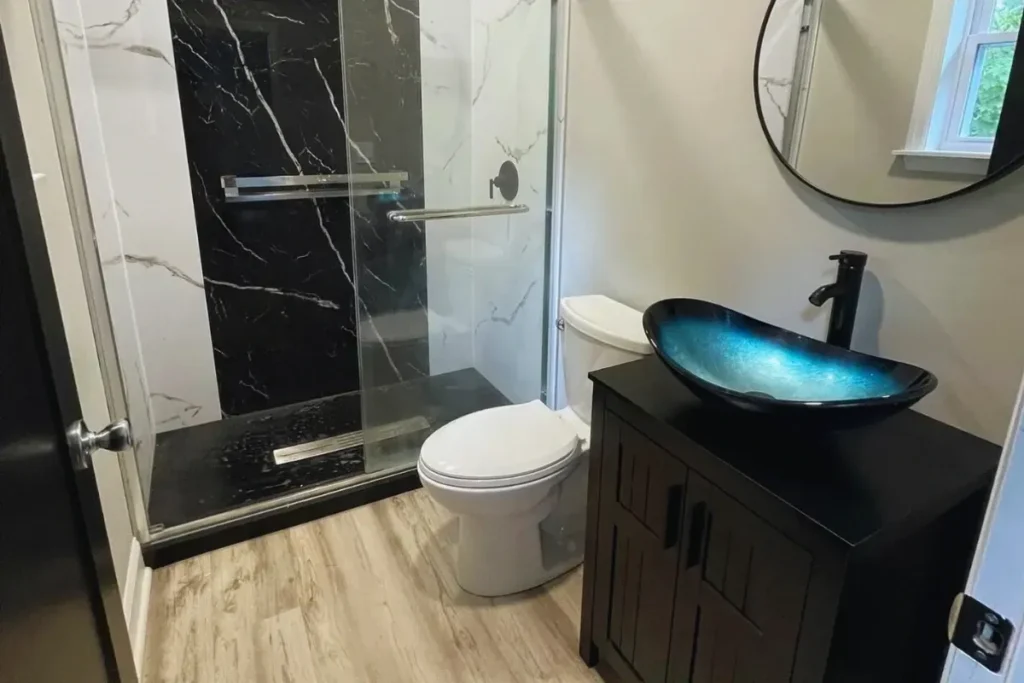
How Do You Choose the Right Mirror for Your Bathroom?
Start with the vanity. The mirror should be about as wide as the vanity or a little narrower, never wider in a tight room.
Match the Finish
Pick a frame that ties into the faucet or cabinet hardware. Black, brushed nickel, and gold all work when they repeat somewhere else in the room.
Decide on Storage First
If you have no linen closet, a medicine cabinet may matter more than looks. Pick the storage plan, then the mirror.
Storage and mirrors work together. Read our smart bathroom storage solutions before you pick a flat mirror over a cabinet. If you are also choosing the sink, see pedestal sink vs vanity for small bathrooms. For more space-saving ideas, our post on how to make a small bathroom look bigger pairs well with this one.
Small Bathroom Mirror Questions
Usually no. In a small bathroom, a mirror that matches the vanity width or sits slightly narrower looks balanced. A wider mirror can make the wall feel crowded.
Often yes, especially in Philadelphia bathrooms with no window. They add even light right where you need it. Plan the wiring before the walls are closed.
Yes. A mirrored medicine cabinet does both jobs. A recessed model saves the most space, but the wall must have room between the studs and no pipes in the way.
Brighten Your Small Philadelphia Bathroom
Showcase Remodels plans mirrors, lighting, and storage together so small Philadelphia bathrooms feel open and bright. Call for a free design consultation.
