







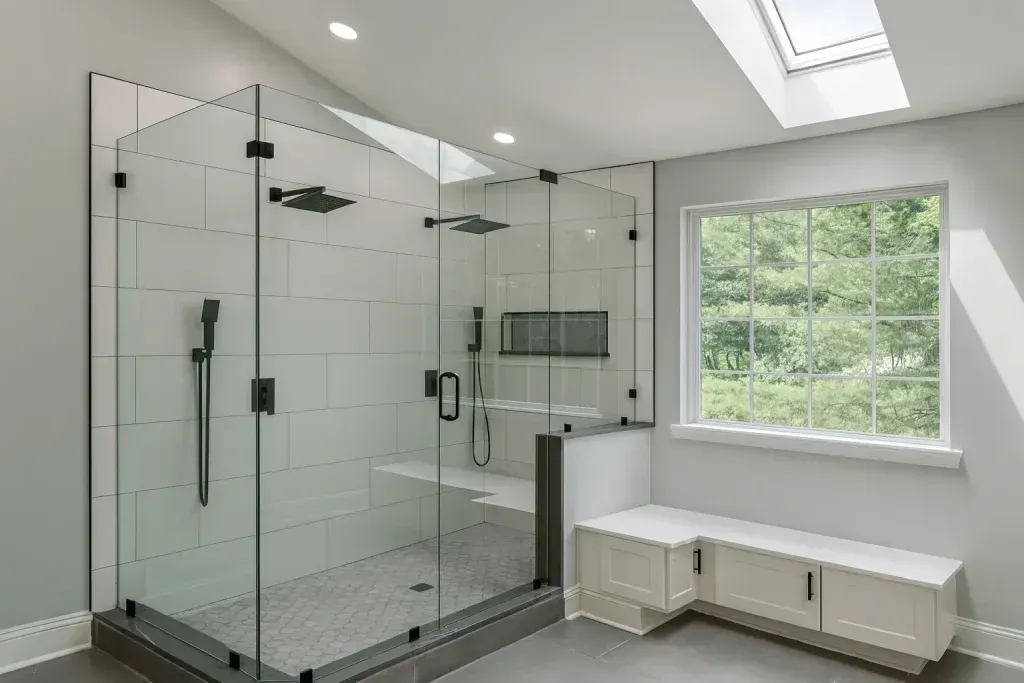
Doing it yourself can save money on the right jobs. On the wrong ones, it can cost you twice. Here is how to tell the difference.
Where DIY Makes Sense and Where It Doesn't
DIY works well for cosmetic jobs like paint, mirrors and hardware. Hire a contractor for anything behind the walls or under the floor, like plumbing, wiring, waterproofing and tile showers. That split keeps the savings where they are real and the risk where a pro can handle it. For a full bathroom renovation, most homeowners end up using both.
Below we cover the true cost of DIY, the jobs that need a pro, the extra risks in older homes, and how to decide.
Does a DIY Bathroom Remodel Really Save Money?
It saves on labor, but not always on the total bill. Labor is a big part of any remodel, so skipping it looks like an easy win on paper.
Tools and materials add up
You will buy or rent tools a contractor already owns, like a wet saw, mixing paddle and level. You also pay retail for materials that pros often buy at trade pricing.
Mistakes cost the most
A tile floor set out of level or a shower valve installed crooked often has to be torn out and redone. Paying a pro to fix DIY work usually costs more than hiring them first.
Your time has a price
A weekend project often stretches into many weekends. If this is your only bathroom, that delay affects everyone in the house.
Warranties and resale
Professional work usually comes with a written warranty. DIY work does not. When you sell, buyers and inspectors may ask who did the bathroom and whether permits were pulled.
Insurance is one more thing to check. If a DIY plumbing mistake floods the floor below, some policies may question the claim. A licensed, insured contractor carries coverage for their own work, which protects you if something goes wrong.
DIY still makes sense when the job is small, the risk is low, and you enjoy the work. Painting, swapping a mirror or replacing towel bars are good examples.
Which Bathroom Jobs Should You Leave to a Pro?
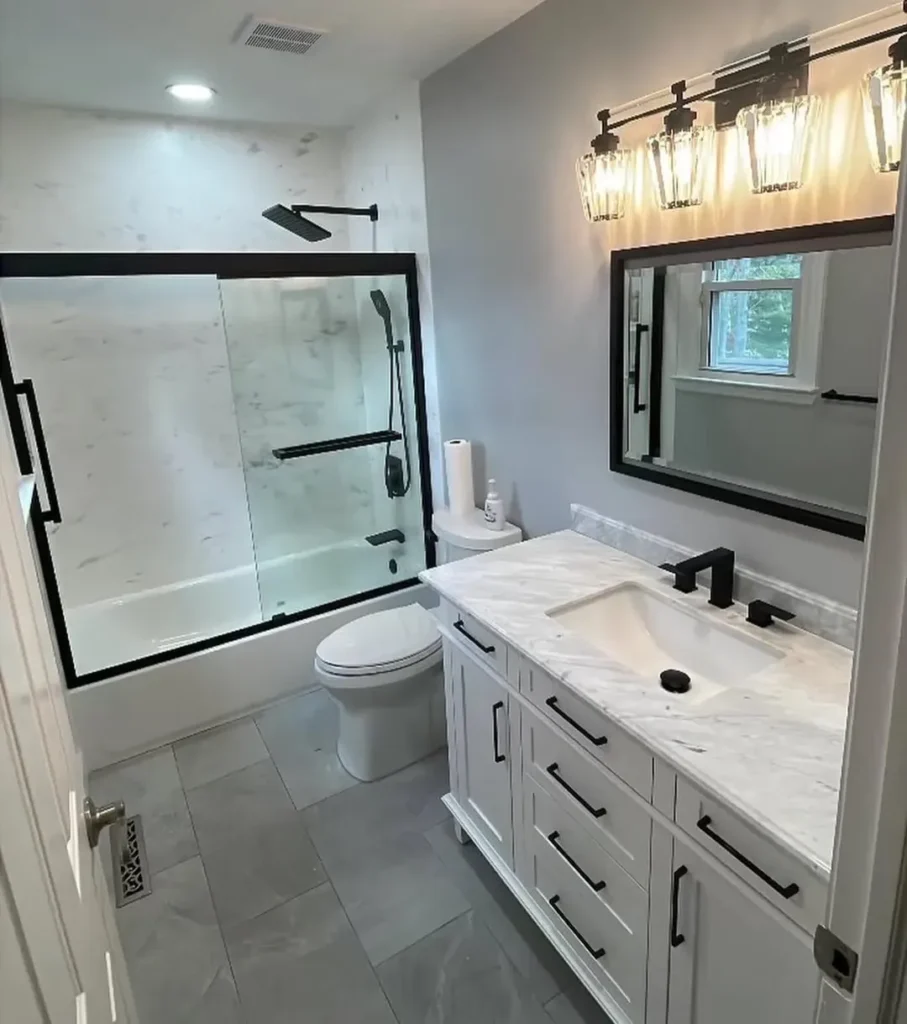
Anything that stops water or carries water, power or waste belongs with a pro. These are the jobs where a small mistake hides for months before it shows up as a big repair.
Waterproofing and shower tile
A shower is only as good as the membrane behind the tile. One missed corner can let water into the wall for years before you see a stain.
Moving plumbing or wiring
Relocating a drain, vent or outlet usually needs a permit and an inspection. Unpermitted work can cause problems when you sell the house.
Lead paint and asbestos
Older homes may hide both. The EPA has lead-safe steps for DIYers working in homes built before 1978. The EPA’s asbestos guidance for families says old vinyl floor tile and adhesive may contain asbestos and should be tested before a renovation disturbs them.
Electrical work
Bathroom outlets, lights and fans sit near water. New circuits and fixtures are a job for a licensed electrician.
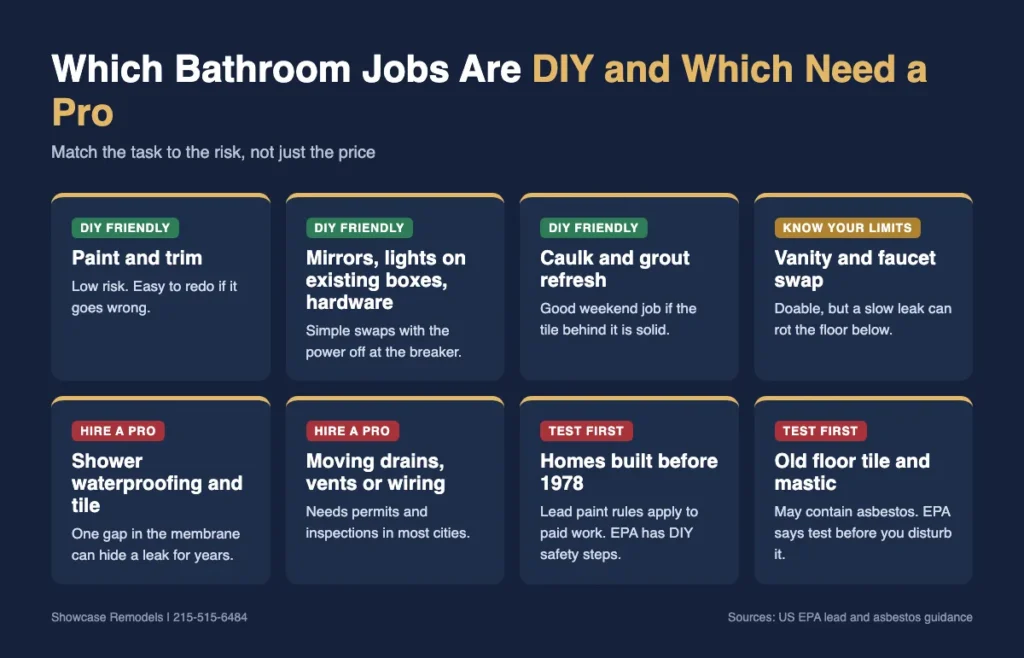
The chart below sorts common bathroom tasks by how safe they are to do yourself.
Why DIY Gets Harder in Older Philadelphia Homes
Older homes add risks you cannot see from the doorway. Many Philadelphia row homes were built long before 1978, so lead paint is a real possibility. Under the EPA Renovation, Repair and Painting rule, firms paid to disturb paint in those homes must be certified and follow lead-safe work practices.
Old homes also tend to have out-of-square walls, uneven floors and drain lines that do not match modern fixtures. Those are exactly the problems that turn a simple swap into a rebuild.
Showcase Remodels handles 15 to 17 projects a day throughout Philadelphia and the surrounding communities, and plenty of those homes are decades old. Customers notice that experience. One review praised how clean the crew kept the house during the work.
Older plumbing is another trap for DIYers. Galvanized or cast iron pipes can crack when disturbed, turning a simple faucet swap into an emergency call on a Sunday night.
Want to keep costs down? A good contractor will tell you which small tasks you can handle before or after the main work.
How to Decide Between DIY and Hiring a Pro
Ask three questions. Could this job cause a leak, a shock or a fall if it goes wrong? Does it need a permit? Would you know how to fix it if it failed?
If you answer yes to any of them, hire a pro for that part. Keep the painting, decor and finishing touches for yourself.
Plan the order carefully, because a DIY step done at the wrong time can block the pros. Our guide to what order to remodel a bathroom in lays out the sequence. When you are ready to hire, read how to choose a bathroom remodeling contractor first.
A smart middle ground
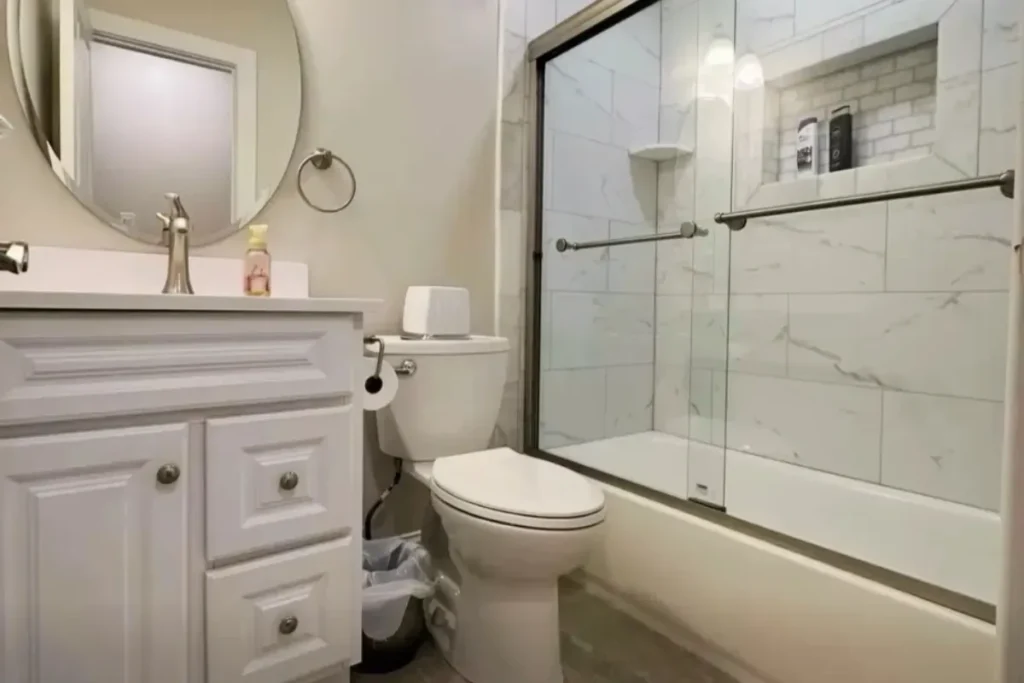
Many homeowners hire a pro for the shower, plumbing and tile, then paint and add accessories themselves. You keep some savings, and the parts that protect your home from water are done right.
Be honest about your schedule too. If you work full time, a job a pro finishes in days could take you many weekends.
Get a professional quote even if you plan to DIY. It shows you exactly what you would save and helps you decide if the time is worth it.
Frequently Asked Questions
Waterproofing and tiling a shower is the hardest part for most people. It takes skill, the right materials and patience. Errors often stay hidden until water damage shows up later. If you are unsure about waterproofing, hire a pro for the shower and keep the rest.
Yes, many homeowners do. Demolition, painting and installing accessories are common DIY pieces. Agree on the split with your contractor in writing before work starts. Make sure your part of the work is finished before the crew arrives, so they are not waiting on you.
It depends on the work. Cosmetic updates usually do not need one, but plumbing, electrical and structural changes often do. Check with the Philadelphia Department of Licenses and Inspections before you start. A licensed contractor can pull permits and schedule inspections for you.
Get a Pro on the Hard Parts
Showcase Remodels handles the plumbing, waterproofing and tile work Philadelphia bathrooms need. Call us to book a free design consultation.
