






A deep tub can turn a bathroom into a retreat. Here is how to know if one fits your space, your house, and your routine.
A Deeper Tub Means a Bigger Decision
A soaking tub is right for your Philadelphia bathroom if you take baths often and have the floor space to fit one. The floor must also support it, and the tub has to fit up the stairs. If your household mostly showers, the space may serve you better as a larger shower.
Soaking tubs are deeper than a standard tub, so you can sink in up to your shoulders. They come freestanding or built into an alcove. Choosing between them is a common step in bathtub replacement in Philadelphia, especially in older homes where every inch counts.
This guide compares tub styles, lists the space and safety rules, explains what older Philadelphia homes need, and helps you decide between a soaking tub and a shower.
What Types of Soaking Tubs Are There?
Soaking tubs come in a few main styles. Each one fits a different room.
Freestanding Tubs
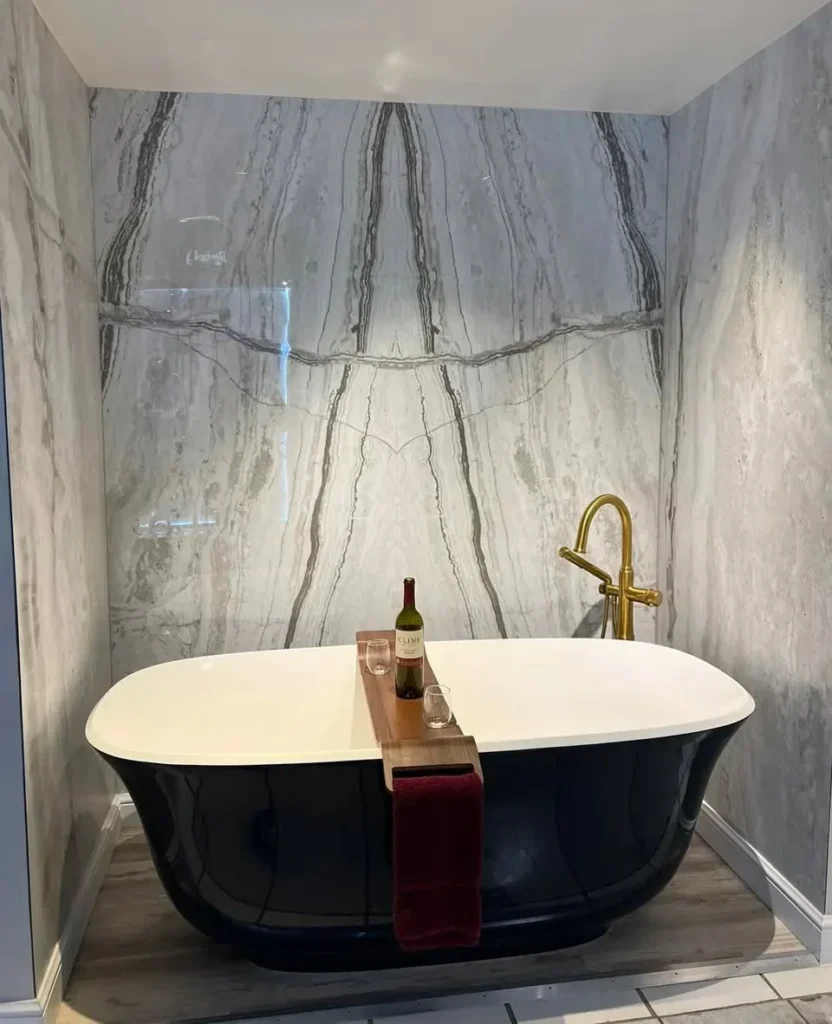
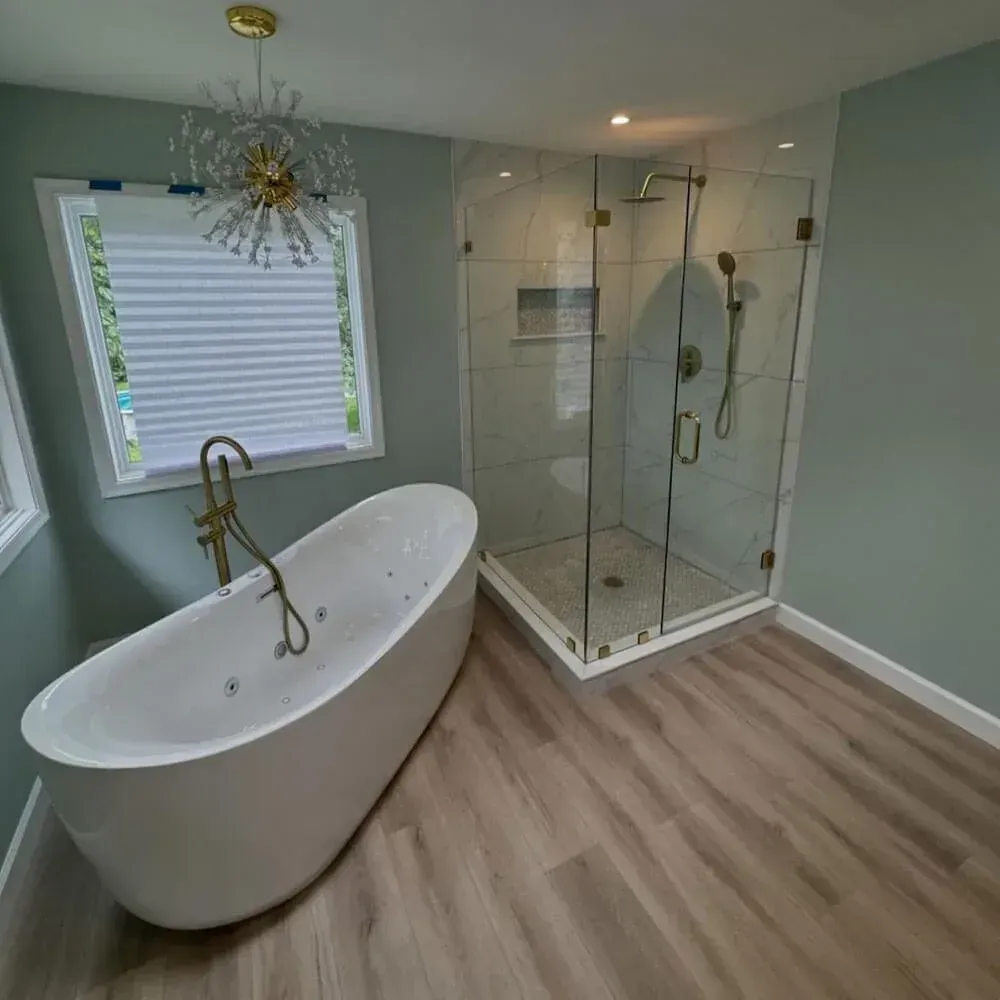
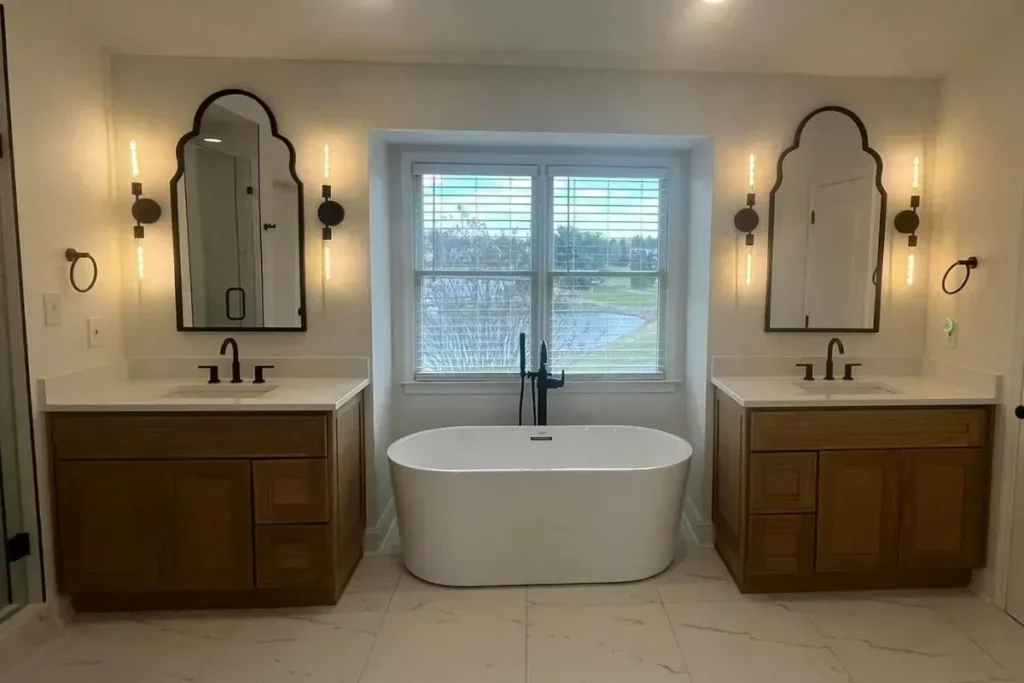
A freestanding tub sits on its own with space around it. It makes a strong visual statement and works well in a larger bathroom. It needs room on all sides for cleaning and a filler mounted on the floor, wall, or tub deck.
Alcove Soaking Tubs
An alcove tub fits between three walls, like a standard tub, but deeper. It is the best choice for smaller rowhome bathrooms because it uses the same footprint as the old tub.
Drop-In Tubs
A drop-in tub sits inside a built deck. The deck adds a ledge for candles or bath items, but it also takes more floor space.
Japanese Style Tubs
These are short and very deep, so you sit upright. They fit tight rooms where a long tub will not.
Jetted Soaking Tubs
Some deep tubs add air or water jets. They need a power supply, an access panel, and more ventilation.
How Much Space and Support Does a Soaking Tub Need?
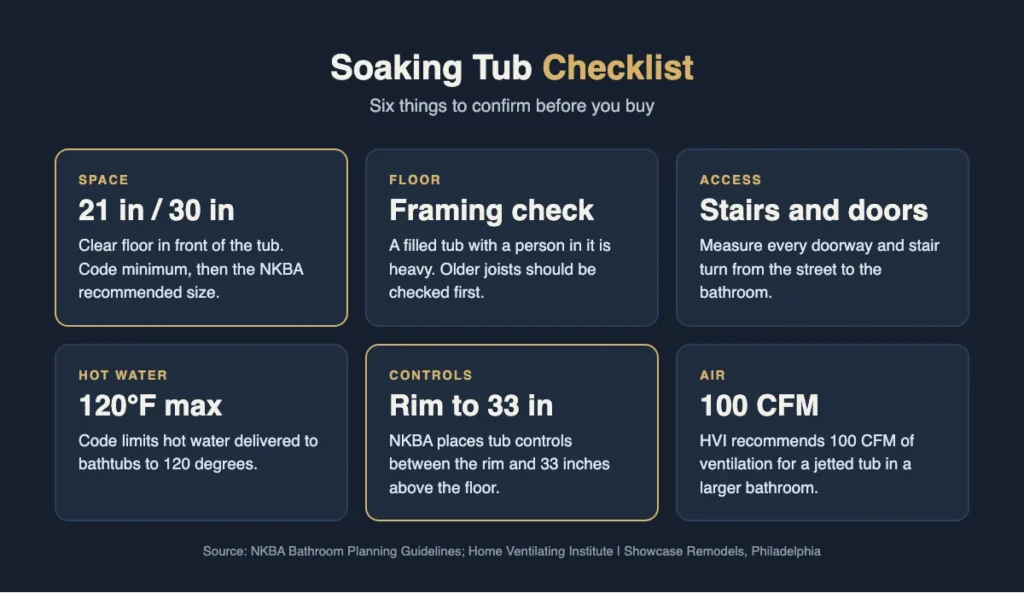
Every tub has to fit the code and still be comfortable. The National Kitchen and Bath Association planning guidelines call for at least 21 inches of clear space in front of a tub, with 30 inches recommended.
Controls and Water Temperature
NKBA recommends tub controls reachable from inside and outside the tub, between the rim and 33 inches above the floor. The code also limits hot water delivered to bathtubs to 120 degrees.
Safety Around the Tub
The guidelines advise against steps outside a tub, and require a grab bar if steps are used. Slip-resistant tub bottoms are recommended. Walls near the tub should be reinforced for grab bars that hold 250 pounds.
Lights Over the Tub
Hanging light fixtures cannot sit within 3 feet horizontally and 8 feet vertically of the tub rim. That rule matters if you want a chandelier over a freestanding tub.
Deep tubs also make a lot of steam. The Home Ventilating Institute recommends 100 CFM of exhaust for a jetted tub in bathrooms over 100 square feet.
Can an Older Philadelphia Home Handle a Soaking Tub?
Many can, but older homes need a few extra checks before a deep tub goes in.
Floor Framing
A soaking tub full of water, plus a person, is much heavier than an empty tub. Older joists may be undersized, notched for past plumbing, or softened by old leaks. The floor should be checked and reinforced if needed.
Structural work changes the permit picture. The City of Philadelphia building permit guide requires a building permit for changes to the interior of an existing structure and major repairs beyond regular maintenance.
Getting It Upstairs
Rowhome stairs are narrow and often turn. Measure every doorway and landing from the front door to the bathroom before ordering a one-piece tub.
Hot Water Supply
A deep tub takes more hot water to fill. An older, smaller water heater may run out before the tub is full.
For a free design consultation, Showcase Remodels visits your home, listens to your goals, and gives an honest assessment. That visit is the right time to talk through framing, stair access, and hot water, before you fall in love with a tub that will not fit. The filler, lighting, and floor can then be planned together.
Should You Choose a Soaking Tub or a Larger Shower?
The best choice follows how your household actually uses the bathroom.
Choose a Soaking Tub If
Someone in the house takes regular baths, you have young children who bathe, or this is the primary suite and a second bathroom already has a shower.
Choose a Larger Shower If
Nobody has used the tub in years, climbing over a tub wall is getting harder, or this is the only full bathroom and quick daily showers matter most.
Keep One Tub in the House
Many families keep at least one tub somewhere in the home for small children or future buyers, even if the main bath becomes a shower.
If you are rethinking the whole room, read reconfiguring a bathroom layout in an older Philadelphia home. Adding a tub means more steam, so see how to size a bathroom exhaust fan. Still torn? Our post on walk-in shower vs bathtub compares the two in detail.
Soaking Tub Questions
Soaking tubs are noticeably deeper than a standard tub, so water can reach your shoulders. Japanese style tubs are the deepest and let you sit upright. Check the listed water depth, not just the outside height.
Yes. An alcove soaking tub uses the same footprint as a standard tub, and Japanese style tubs are short and deep. In small Philadelphia rowhome bathrooms, those two styles are usually the best fit.
Sometimes. A filled tub is heavy, and older homes may have undersized or damaged joists. Have the framing checked before you buy, especially for large freestanding or cast iron tubs.
Find the Right Tub for Your Philadelphia Bathroom
Showcase Remodels helps Philadelphia homeowners choose and install soaking tubs that fit the space, the structure, and the way they live. Call for a free design consultation.
