








Grout is the first line of defense for your tile. Here is how to spot trouble early and fix it the right way.
Small Lines, Big Job
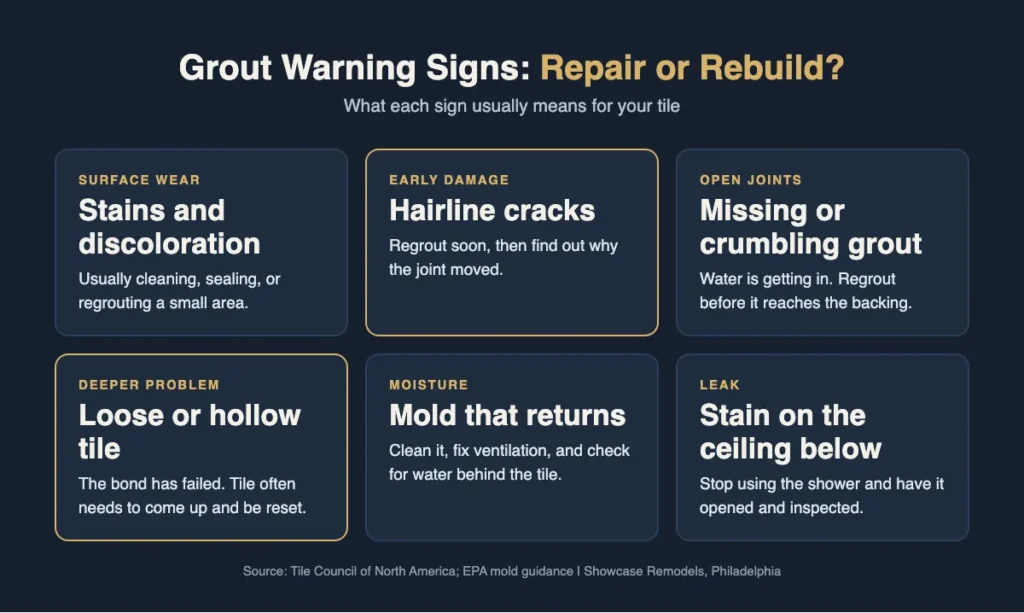
Your bathroom needs grout repair if you see cracks, gaps, crumbling joints, stains that will not clean, or mold that keeps coming back. Loose or hollow sounding tile is a sign the problem goes deeper than the grout.
Grout fills the joints between tiles and helps keep water from reaching what sits behind them. When it fails, moisture can get into the wall or floor. Catching it early is far cheaper than rebuilding a shower, which is why grout condition deserves a close look before planning any tile installation in Philadelphia.
This guide walks through the warning signs, why grout fails, the extra risks in older Philadelphia homes, and how to choose between a repair and new tile.
What Are the Signs Your Grout Needs Repair?
Walk your bathroom with good light and look closely at the shower, the tub edge, and the floor near the toilet.
Cracks in the Grout Lines
Hairline cracks let water into the joint. They often start at corners and where the tub meets the wall.
Missing or Crumbling Grout
If grout powders when you scratch it or has fallen out, the joint is open to water.
Stains That Will Not Come Out
Dark lines that survive cleaning can mean moisture is sitting in the grout and below it.
Mold That Keeps Returning
Mold that comes back within days of cleaning points to trapped moisture, weak ventilation, or both.
Loose or Hollow Tile
Tap tiles gently with a coin or knuckle. A hollow sound or a tile that moves means the bond underneath has failed.
Stains Below the Bathroom
A water mark on the ceiling below is the most serious sign. Stop using that shower until it is checked.
Why Does Bathroom Grout Crack and Fail?
Grout rarely fails for no reason. Knowing the cause keeps the repair from failing again.
According to the Tile Council of North America, tile can lose its bond for several reasons. They include too few movement joints, poor thinset coverage, moisture damage to the subfloor, and too much floor flex. The same source warns that any repair that does not address the cause may not last very long.
The Wrong Grout for the Joint
The TCNA grout guidance says joints smaller than 1/8 inch should use unsanded grout and wider joints should use sanded grout. Matching the grout to the joint is a basic step that is easy to get wrong.
Joint width rules come from the Tile Council of North America, which also notes grout helps accommodate uneven surfaces between tiles.
Moisture and Mold
Constant dampness breaks grout down faster. The EPA mold guide says wet materials dried within 24 to 48 hours usually will not grow mold.
If the mold patch is larger than about 10 square feet, the EPA guide to mold and moisture recommends following its remediation guidance or getting professional help.
Why Do Older Philadelphia Bathrooms Have More Grout Problems?
Older homes give grout more reasons to crack. Knowing them helps you judge whether a quick fix will hold.
Moving Floors
Older wood floors can flex more than modern framing. Every step bends the floor a little, and rigid grout cracks along the movement.
Tile Over Old Surfaces
Many older bathrooms have tile set over plaster, old mortar beds, or earlier tile. Those layers can shift or trap moisture.
Little or No Waterproofing
Showers built decades ago often have no modern membrane behind the tile. Once grout opens up, water goes straight into the wall.
Weak Ventilation
Bathrooms with no fan or an old one stay damp longer, which wears grout down year after year.
When Showcase Remodels looks at failing grout, we look past the grout itself to the floor, the wall behind it, and the fan. Our team has been remodeling bathrooms since 2002, and a lasting fix starts by finding why the joint failed in the first place.
Should You Repair the Grout or Replace the Tile?
Grout repair is the right call when the tile is solid and only the joints are worn. New tile is the right call when the bond or the backing has failed.
Repair the Grout If
Tiles are firmly bonded, cracks are limited, and there is no sign of water behind the wall. Regrouting and sealing can add years of life.
Replace the Tile If
Tiles are loose or hollow, cracks keep coming back, the wall feels soft, or water has stained the ceiling below. Those signs point to a failed bond or failed waterproofing.
Do Not Just Cover It Up
Caulking over cracked grout or gluing a surround over failing tile hides the problem and can trap water.
Seal and Maintain
After any repair, seal cement grout as the maker directs and run the fan after every shower. Wiping down shower walls once in a while also keeps grout cleaner for longer.
If new tile is on the table, learn why bathroom waterproofing matters in Philadelphia rowhomes. For fresh design ideas, browse our bathroom backsplash ideas. And if steam is the root cause, check whether your bathroom fan is big enough.
Replacing only a section of tile? Learn how to approach matching new tile to an older rowhome before you buy.
Grout Repair Questions
Well installed and sealed grout can last many years, but heavy use and moisture wear it down. In older Philadelphia bathrooms with weak ventilation, grout often shows wear sooner.
The old grout should be removed to a proper depth first. New grout spread over a thin layer of old grout tends to crack and pop out.
Not always, but it can let water in. If you also see loose tile, a soft wall, or a stain below the bathroom, have the shower checked for a leak.
Fix the Grout, Fix the Cause
Showcase Remodels repairs and replaces bathroom tile across Philadelphia and finds out why the grout failed. Call for a free design consultation.
