







Skip These Costly Mistakes
The biggest kitchen remodel mistakes Philadelphia homeowners make are skipping a real plan, underbudgeting, picking trendy materials, and changing the layout late in the project. These four mistakes alone can add $10,000 and 4 weeks to a remodel. Here are the seven mistakes we see most often in our kitchen remodel projects across Philadelphia and how to avoid each one.
The 7 Biggest Kitchen Remodel Mistakes
After 20+ years of kitchen remodels in Philadelphia, the same seven mistakes show up again and again. Catching them before demo day saves time, money, and a lot of regret.
1. Starting Without a Detailed Plan
Homeowners who start with a rough idea and figure it out as they go always pay more. Cabinets get reordered. Tile gets returned. Plumbing gets re-routed twice. A complete plan with measured drawings, material picks, and a final layout signed off before demo cuts change orders by 80%.
2. Underbudgeting and Skipping a Contingency
Most Philadelphia kitchen remodels uncover at least one surprise behind the walls. Outdated wiring, water damage, asbestos tile, or cracked drain lines are common in pre-1980 rowhomes. Always set aside 15% of the budget as a contingency. If you do not need it, you have extra savings. If you do, the project does not stall.
3. Picking Trendy Materials Over Durable Ones
Zellige tile, cement counters, and matte black hardware look beautiful on Instagram. They also stain, scratch, and show fingerprints. We have replaced more matte black faucets in Philadelphia kitchens than any other fixture. Pick materials that work for daily cooking, then add a trendy backsplash or paint color you can swap later.
4. Skimping on Lighting
A single ceiling light is the most common lighting mistake. A working kitchen needs three layers, ambient (overhead), task (under-cabinet and over-island), and accent (toe-kick or in-cabinet). Adding under-cabinet LED strips during the rough-electrical phase costs $400 to $800 and changes how the kitchen feels.
5. Forgetting About Storage
Homeowners obsess over countertops and forget about drawer pulls, pull-out shelves, and pantry layout. A kitchen with poor storage looks beautiful on day one and cluttered by month three. Plan storage around what you actually own. Count your pots, pans, and small appliances before you finalize the cabinet layout.
6. Moving the Sink, Range, or Refrigerator
Moving any of these three appliances triggers plumbing, gas, or electrical work that adds $3,000 to $10,000 and 1 to 3 weeks. If the existing layout works, keep it. Spend the saved budget on better cabinets or countertops instead.
7. Hiring the Cheapest Contractor
The lowest bid almost always uses subcontractors, cheap materials, or unlicensed labor. The price difference shows up in delays, change orders, and warranty problems. Get 3 bids from licensed Philadelphia contractors and pick the middle one with the best reviews.
What Each Mistake Actually Costs
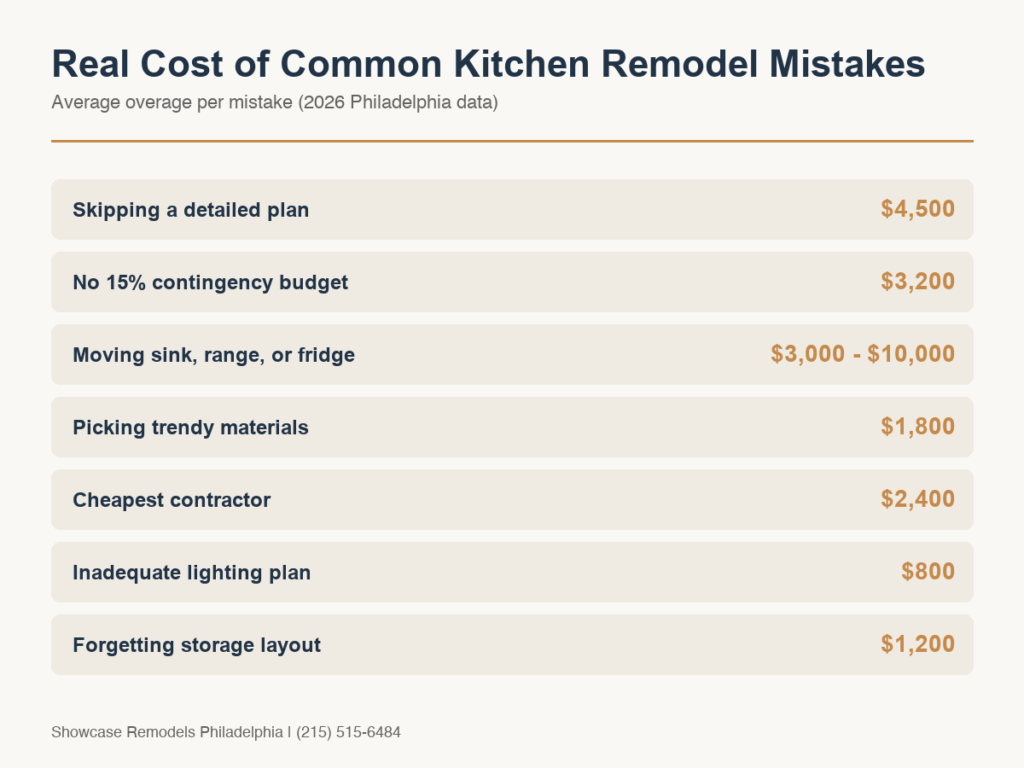
Each of these mistakes has a real dollar cost. According to a 2026 Houzz Kitchen Trends Study, 40% of kitchen remodel homeowners go over budget by 10% or more. The biggest overage sources line up directly with the mistakes above.
Skipping a plan: average overage of $4,500 from change orders, returns, and re-orders. Underbudgeting: average overage of $3,200 when surprises hit. Picking trendy materials: average $1,800 in replacement costs within 2 years. Moving appliances: $3,000 to $10,000 in added plumbing, gas, and electrical work.
On the other side, every smart move saves real money. Locking in the design before demo cuts change-order costs by an average of $2,400. Building a 15% contingency means surprises do not stall the project. Picking durable materials cuts replacement costs to zero for 10+ years.
For more on where your budget actually goes, see our guide to the biggest expense in a kitchen remodel.
Philadelphia-Specific Kitchen Remodel Traps
Philadelphia rowhomes have their own set of traps. We see the same issues over and over in projects in Fishtown, South Philly, Kensington, and the Northeast.
Old electrical panels are the most common one. A 100-amp panel from 1965 cannot handle a modern kitchen with an induction range, a built-in microwave, and an upgraded dishwasher. Budget $1,500 to $3,500 for a panel upgrade before you finalize appliance picks.
Galley layouts in rowhomes trick homeowners into thinking an island will fit. The National Kitchen and Bath Association (NKBA) recommends a minimum of 42 inches of clearance on all sides of an island. Most Philadelphia rowhome kitchens cannot meet that without removing a wall. A peninsula or a rolling cart is usually the better answer.
We worked with a homeowner in Manayunk who insisted on an island in a 10×12 kitchen. After laying it out, we showed her there was only 32 inches of clearance on one side. We swapped to a peninsula with seating and saved her $4,500 in structural work. She wrote a 5-star review about it.
Old plumbing in pre-1950 homes can also stop a project cold. Cast iron drain lines crack when stressed. Lead service lines need replacement before any major plumbing work. We pre-inspect every Philadelphia rowhome kitchen with a camera scope before we quote. See our kitchen layout redesign service for more on planning a rowhome remodel.
How to Plan a Kitchen Remodel That Avoids These Mistakes
Start with a written scope. List every change, every material, and every fixture. Get measured drawings from a designer or contractor. Review the drawings until they match exactly what you want.
Build a budget with a 15% contingency line at the top. If the contractor’s quote is $40,000, plan for $46,000. Track every change order so you know where the money goes.
Pick materials in person, not on Pinterest. Touch the cabinet door, see the countertop in real light, and feel the floor tile. Photos lie about scale, color, and texture.
Interview three contractors. Ask each one to walk you through their last five Philadelphia kitchen projects. Ask for references in your neighborhood. For more on planning, see our guide on whether $10,000 is enough for a new kitchen and our breakdown of what adds the most value to a kitchen remodel.
Frequently Asked Questions
Starting without a detailed plan. Most overruns and delays trace back to picking materials, layouts, or appliances mid-project instead of before demo day. A complete plan with signed-off drawings cuts change-order costs by an average of $2,400 in Philadelphia projects.
Set a 15% contingency line on top of the contractor’s quote. Lock in materials before demo. Avoid moving the sink, range, or fridge. Get three written bids and pick the middle one with the best reviews. These four steps prevent 80% of budget overages.
Trendy is fine for paint colors and backsplash tile, things you can swap in a weekend. Trendy is risky for cabinets, countertops, and floors, where replacement costs $2,000 to $15,000. Pick durable materials for the expensive items and save the trendy picks for what is easy to change.
Get a Free Kitchen Remodel Estimate
Showcase Remodels has been remodeling kitchens in Philadelphia since 2002. With 60 full-time employees and over 270 five-star reviews, we deliver quality work on time and on budget. Schedule a free design consultation to get a detailed estimate for your project.
