







The Quick Answer
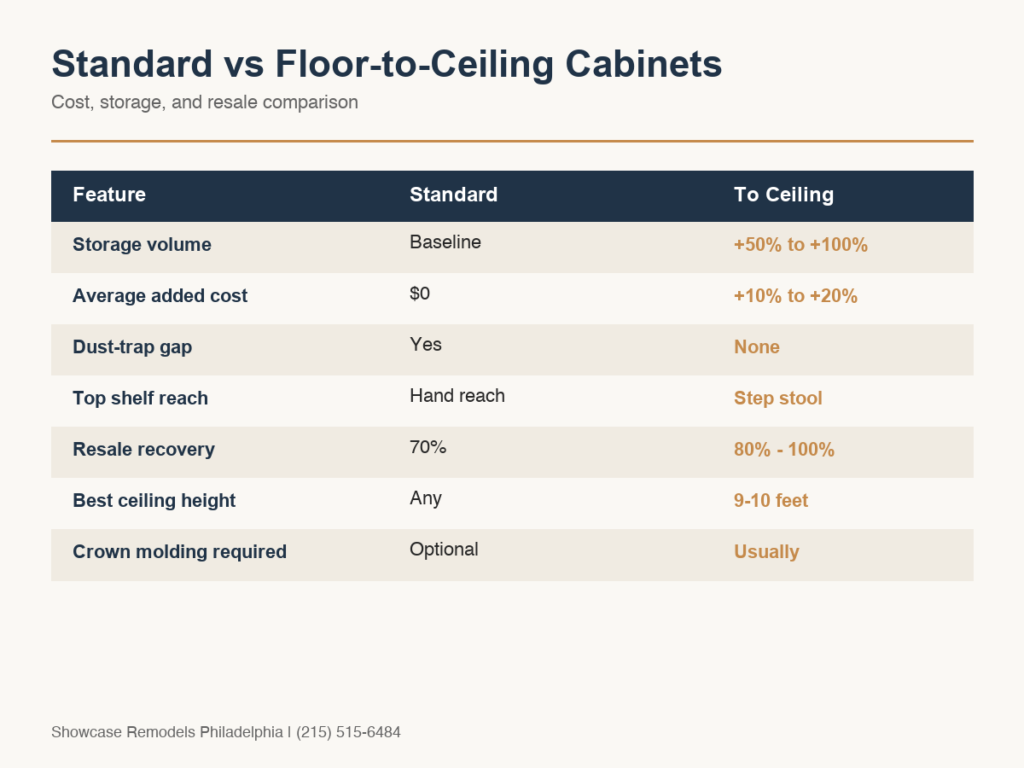
Yes, kitchen cabinets should go to the ceiling in most cases. They add 50% to 100% more storage, eliminate the dust-trap gap, and make the kitchen feel taller. Ceiling cabinets cost 10% to 20% more and need a step stool for the top shelf. For homes with 9-foot or 10-foot ceilings, the upgrade is almost always worth it. Here is everything to weigh before you order new custom cabinetry for your Philadelphia kitchen.
Pros of Cabinets That Reach the Ceiling
Floor-to-ceiling cabinets have been the standard in high-end Philadelphia kitchens for the last 10 years. Here is why.
50% to 100% More Storage
Standard 30-inch wall cabinets stop 18 to 24 inches short of an 8-foot ceiling. Going to the ceiling adds two extra shelves. For a kitchen with 15 linear feet of upper cabinets, that is 45 to 60 cubic feet of extra storage. Holiday platters, large stockpots, and seasonal serving pieces fit on the top shelf instead of taking up space in the basement.
No Dust Trap
The gap between a standard cabinet and the ceiling is the dirtiest spot in most kitchens. It collects grease, dust, cobwebs, and decorative clutter that never gets used. Closing that gap removes a weekly cleaning chore.
Higher Resale Value
Ceiling-height cabinets read as custom. Real estate agents in Philadelphia consistently mention them in listings. Buyers who tour two similar homes will pick the one with floor-to-ceiling cabinets almost every time.
Makes the Kitchen Feel Bigger
The eye follows vertical lines up. Floor-to-ceiling cabinets pull attention upward, which makes a small kitchen feel taller and a low ceiling feel higher. This is the single best trick for a galley kitchen in a Philadelphia rowhome with 8-foot ceilings.
Cons and Real Cost of Ceiling-Height Cabinets
Ceiling cabinets are not free. According to NKBA’s 2026 kitchen design trends, floor-to-ceiling cabinets cost 10% to 20% more than standard wall cabinets. For a kitchen with $12,000 in upper cabinets, that is an extra $1,200 to $2,400.
Higher Material Cost
Taller cabinets need more wood, more drawer boxes, and more hinges. Some cabinet lines charge for a stacked upper (two short cabinets stacked) which adds $200 to $400 per cabinet.
Step Stool Required
Standard cabinets top out at 7 feet. Ceiling cabinets in a 9-foot kitchen top out at 9 feet. Anything stored on the top shelf needs a step stool. Plan to use the top shelf for items you reach for 2 to 3 times a year.
Crown Molding and Trim
Most ceiling-height cabinets need crown molding to hide the seam where the cabinet meets the ceiling. Crown adds $200 to $500 to the project. Some modern frameless cabinet styles skip the crown for a flush look, but the install has to be perfectly level.
Installation Time
Taller cabinets are heavier and harder to hang. Each upper cabinet takes 30% more install time than a standard wall cabinet. For a 20-cabinet kitchen, that adds 6 to 8 hours of labor.
Ceiling Height Limits
Cabinets that go all the way up work best with 9 to 10 foot ceilings. With 8-foot ceilings, the cabinets can feel oppressive and the kitchen can feel cramped. Most Philadelphia rowhomes have 8-foot ceilings on the first floor. We still recommend going to the ceiling in those homes, but with thinner crown and lighter cabinet colors.
What Works in Philadelphia Kitchens
Philadelphia has a wide range of ceiling heights. A 1920s rowhome in South Philly has 9 to 10 foot first-floor ceilings. A 1950s split level in the Northeast has 8-foot ceilings. A 1990s townhome in Northern Liberties has 9-foot ceilings. The right cabinet choice depends on the home.
We worked with a homeowner in Queen Village whose 1880s rowhome had 10-foot ceilings. We installed floor-to-ceiling shaker cabinets in white with a crown molding detail. The top row holds her grandmother’s china. The middle and bottom rows hold daily items. She said the kitchen feels twice as big.
For lower 8-foot ceilings in Northeast Philly and Mayfair rowhomes, we recommend a single tall cabinet with no stacked design. This keeps the kitchen feeling open while still gaining the storage benefit. A flat panel door style in a light color also helps the ceiling feel higher.
Two-tone kitchens are the other Philadelphia trend. Dark base cabinets with white floor-to-ceiling uppers, or the reverse. The contrast adds visual interest and the ceiling cabinets still read as custom.
See our custom cabinetry service in Philadelphia for full design options and material samples.
When Ceiling Cabinets Are Worth It
Yes, go to the ceiling if you have 9-foot or 10-foot ceilings, want more storage, plan to stay in the home 7+ years, or are remodeling for resale. The extra cost recovers at resale and the storage pays daily dividends.
Skip ceiling cabinets if you have 8-foot ceilings and prefer an airy, open feel. Skip them in a very small kitchen where the upper cabinets would dominate the room. Skip them if your budget is tight and you would rather spend the difference on better countertops or appliances.
Consider a hybrid. Floor-to-ceiling cabinets on two walls and open shelves on a third wall. This combines storage with a lighter, more open feel. Open shelves work well over the sink or coffee station where the dishes you use daily live.
For more on cabinet planning, see our guide to budgeting for kitchen cabinets and our breakdown of cheap vs expensive cabinets.
Frequently Asked Questions
Yes. Real estate agents in Philadelphia consistently list floor-to-ceiling cabinets as a feature. The added value recovers 80% to 100% of the upgrade cost at resale, and the kitchen reads as custom rather than builder-grade.
It is called the soffit or the bulkhead. Most builder-grade kitchens leave a 12 to 18 inch soffit between the top of the cabinet and the ceiling. Removing the soffit and extending cabinets to the ceiling is the most common cabinet upgrade in Philadelphia remodels.
Sometimes. If the existing cabinets are recent and the brand still makes matching stacking uppers, yes. If the cabinets are older, custom, or no longer in production, the matching panels usually do not exist. In that case, refacing or replacing the full upper bank is the better path.
Get a Free Kitchen Remodel Estimate
Showcase Remodels has been remodeling kitchens in Philadelphia since 2002. With 60 full-time employees and over 270 five-star reviews, we deliver quality work on time and on budget. Schedule a free design consultation to get a detailed estimate for your project.
