







Walk-in showers do not always need a door. The right choice depends on your bathroom size, layout, and how you want to keep water in. Here is how to decide.
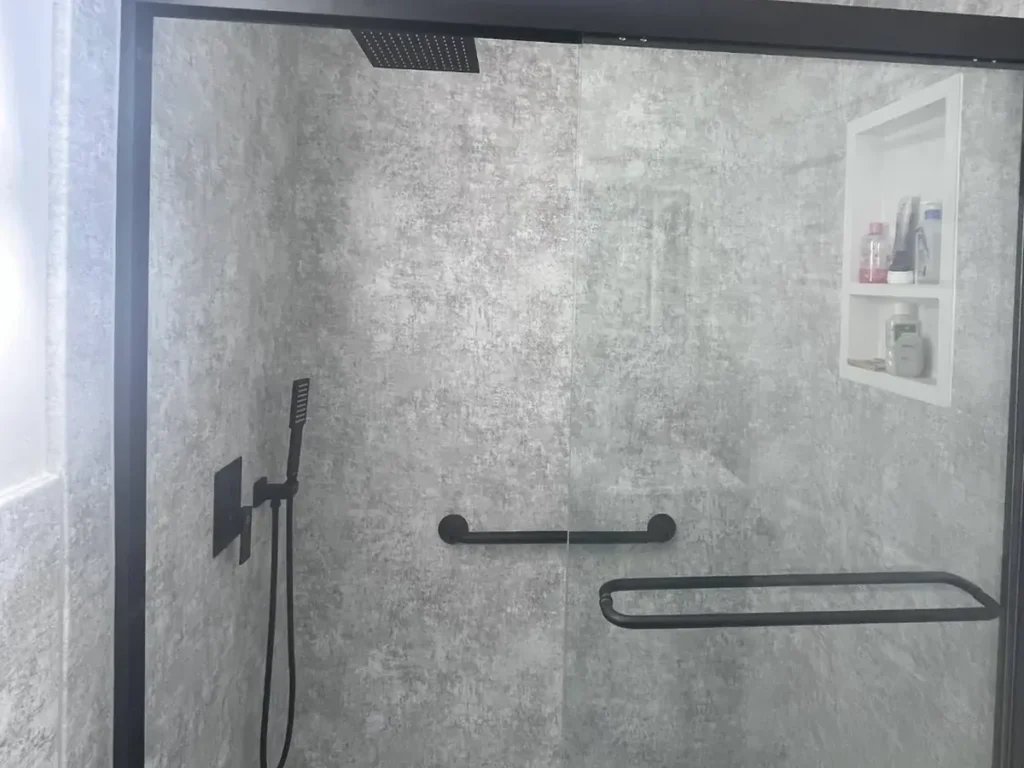
What Counts as a Walk-In Shower?
A walk-in shower is a shower you step into with no high tub wall to climb over. Some have a glass door. Some have just a glass panel. Some have no glass at all.
So do walk-in showers need a door? The short answer is no, not always. Many work fine with a fixed glass panel or an open entry instead.
The right setup comes down to your space, your floor slope, and your budget. A good custom bathroom design keeps water where it belongs no matter which option you pick.
Showcase Remodels builds walk-in showers across Philadelphia. Below we break down when a door helps, when you can skip it, and how to plan a bathroom remodeling in Philadelphia that fits your home. Houzz’s walk-in shower design guide shows popular door configurations and how layout affects water containment.
When You Can Skip the Door
A doorless walk-in shower works best in a larger bathroom. You need enough room to keep the shower opening away from the rest of the space.
The trick is the layout. Place the showerhead so it sprays toward the back wall, not the open side. A long wall or a half glass panel also blocks splash.
More Open and Easy to Clean
No door means no track to scrub and no hinges to wipe down. The shower feels bigger and brighter, and the floor stays one smooth surface.
Better for Aging in Place
A doorless entry is easy to step into and easy to roll into with a walker or wheelchair.
It pairs well with grab bars and a bench for ADA bathroom upgrades. This makes the shower safer for every age.
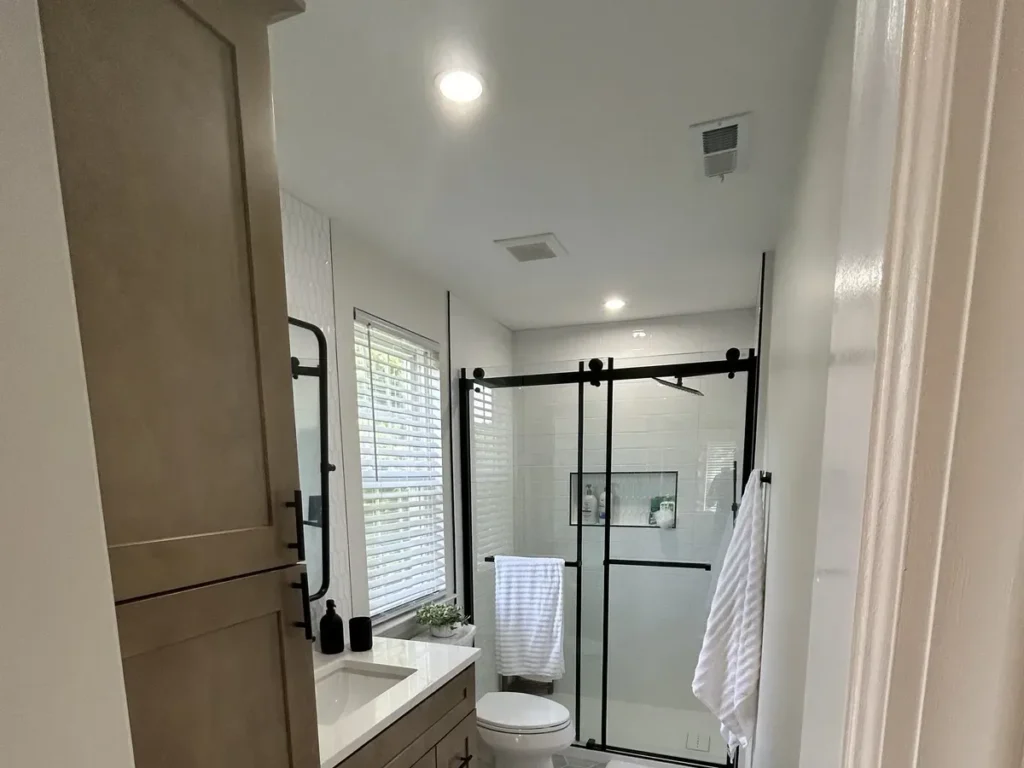
When a Walk-In Shower Does Need a Door
Smaller bathrooms often need a door. When the shower sits close to the sink or toilet, a door keeps water and steam off the rest of the room.
A door also helps if you like long, hot showers. It traps heat so the water stays warm and the room stays cozy.
Sliding Doors Save Space
A sliding glass door slides along a track, so it never swings out. This is the smart pick for a tight Philadelphia bathroom or a shower near a wall.
Hinged Doors Feel Open
A hinged door swings out like a regular door. It gives a clean, open look but needs clear floor space to open all the way.
Not sure which fits? Read our guide on Walk-in shower vs curbless shower to see how the floor design changes your door choice.
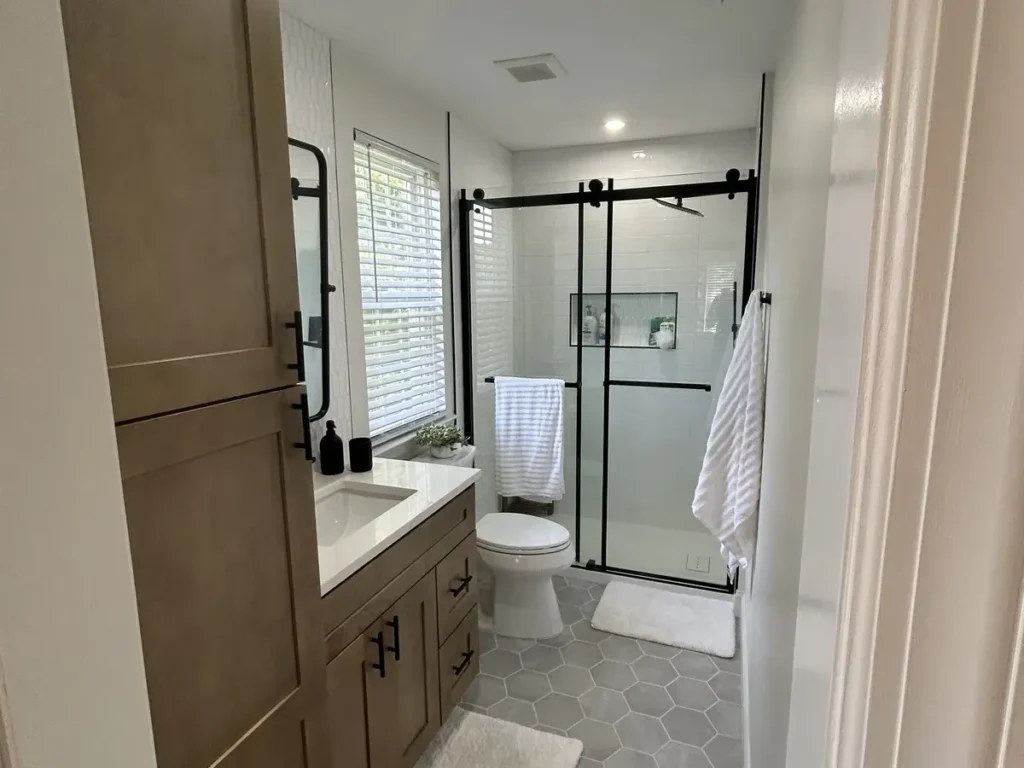
How to Keep Water In Without a Door
Keeping water in is the biggest worry with a doorless shower. The good news is that smart design handles it well.
Slope the Floor the Right Way
The shower floor must slope toward the drain. A correct slope pulls water down fast so it never runs out onto the bathroom floor.
Add a Glass Splash Panel
A single fixed glass panel blocks most spray while keeping the open feel. It gives you the look of an open shower with far less splash.
Place the Showerhead Wisely
Point the showerhead at a back or side wall, away from the open side. A handheld sprayer also lets you aim the water down, not out.
Done right, a doorless shower stays just as dry as one with a door. The wall layout and floor slope do the work.
Does a Door Change the Cost?
Yes, the door choice affects your budget. An open, doorless shower can cost less because you skip the glass and hardware.
But a doorless design may need more tile and a larger waterproof area. That can balance out the savings, so the total often lands close.
Glass doors add cost up front. Frameless glass costs more than framed, while a single fixed panel sits in the middle.
Timeline matters too. See How long a conversion takes to plan around your daily routine before work begins.
Frequently Asked Questions
A doorless shower entry is also one of the best aging-in-place bathroom modifications you can make. A curbless walk-in with no door gives you a safe, easy entry with no obstacles.
Still deciding between a door, a panel, or an open entry? Our Philadelphia team will look at your space and help you pick the right setup.
We handle the design, the slope, and the waterproofing so your shower stays dry and looks great for years.
