







Upper cabinets hold more and hide clutter. Open shelves make a kitchen feel lighter. Here is how to pick for your home.
Open Shelves or Closed Cabinets on the Wall?
For most families, upper cabinets are the better pick because they hold more and hide clutter. Open shelving is better when you want a lighter look and keep a short list of everyday dishes. Many kitchens do best with a mix of both.
The choice shapes how your kitchen looks, how much it holds and how much cleaning it needs. It is one part of planning kitchen storage solutions in Philadelphia.
This post compares the two side by side, with costs, trade-offs and a simple way to decide.
Which One Gives You More Storage?
Upper cabinets give you more storage. A closed cabinet hides plates, cans, small appliances and odd-shaped items behind one clean door. An open shelf shows everything on it.
That matters most in a small kitchen. If you own a lot of mismatched mugs, plastic containers and boxed food, open shelves will look messy fast.
Where Upper Cabinets Win
They use the full wall height. Deep boxes hold stacks of dishes, and doors keep out grease and dust. If storage is your biggest worry, keep the uppers.
Where Open Shelves Win
Shelves work well for items you use every day and like to look at. Think white dishes, nice glasses, cutting boards and a few cookbooks. Keep the edit short and the shelves stay calm.
There is a catch with shelves, though. Open storage only works when you stay tidy. Stacks of chipped mugs and cereal boxes on display do not look like the photos online. Be honest about your habits before you commit.
Everyday Reach
A shelf puts everything within easy reach. There are no doors to open and no step stool for the top row. That helps anyone who cooks a lot and grabs the same bowls daily.
How Do Cost, Cleaning and Resale Compare?
Open shelves usually cost less than a run of cabinets. You pay for a board and brackets, not for boxes, doors and hinges. Cabinets cost more but do more work.
Cleaning
Open shelves collect dust and grease, especially near the range. Plan on wiping them down often. Cabinet doors keep the dishes inside clean, so you only wipe the outside.
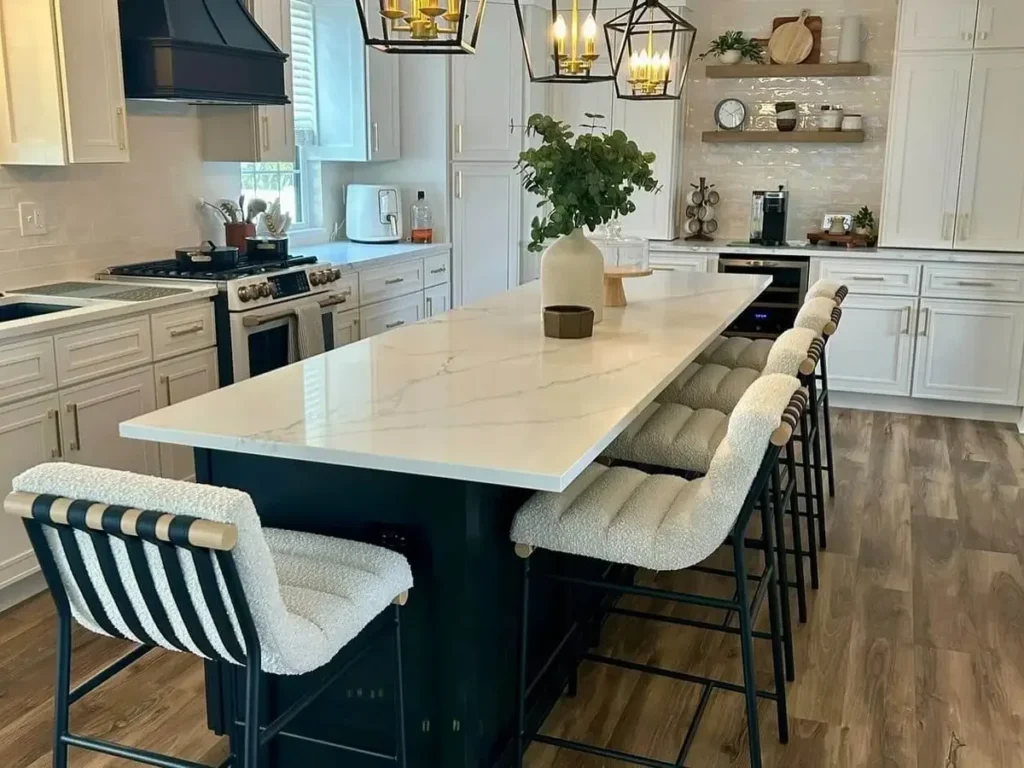
Designers lean toward closed storage right now. In the NKBA 2027 Kitchen Trends Report, 64% of designers said open shelving is on its way out in favor of enclosed storage. The same report found 85% say cabinetry is being designed to hide appliances and functional elements.
Lighting matters too. Open shelves can take under-shelf LED strips that brighten the counter below. Cabinets can do the same underneath, so neither choice loses on light. The difference is the look of the wall above the counter.
Mounting is the other cost to plan for. A shelf loaded with dishes is heavy. It needs brackets screwed into studs, not just drywall anchors. Cabinets need the same care, which is one reason to have a pro hang either one.
Resale
Most buyers still expect upper cabinets, so removing them all can narrow your buyer pool. A few open shelves in a kitchen full of cabinets rarely hurt.
A common middle path is shallower uppers mounted a little higher. Houzz suggests uppers about 10 inches deep or less, set 21 to 24 inches above the counter instead of 18. That keeps storage and opens up the room.
What Works in Philadelphia Homes?
Showcase Remodels has remodeled kitchens in and around Philadelphia since 2002. Older city homes tend to have small rooms with just a couple of usable walls, and that changes the answer. In a narrow rowhome kitchen the uppers carry a lot of the load.
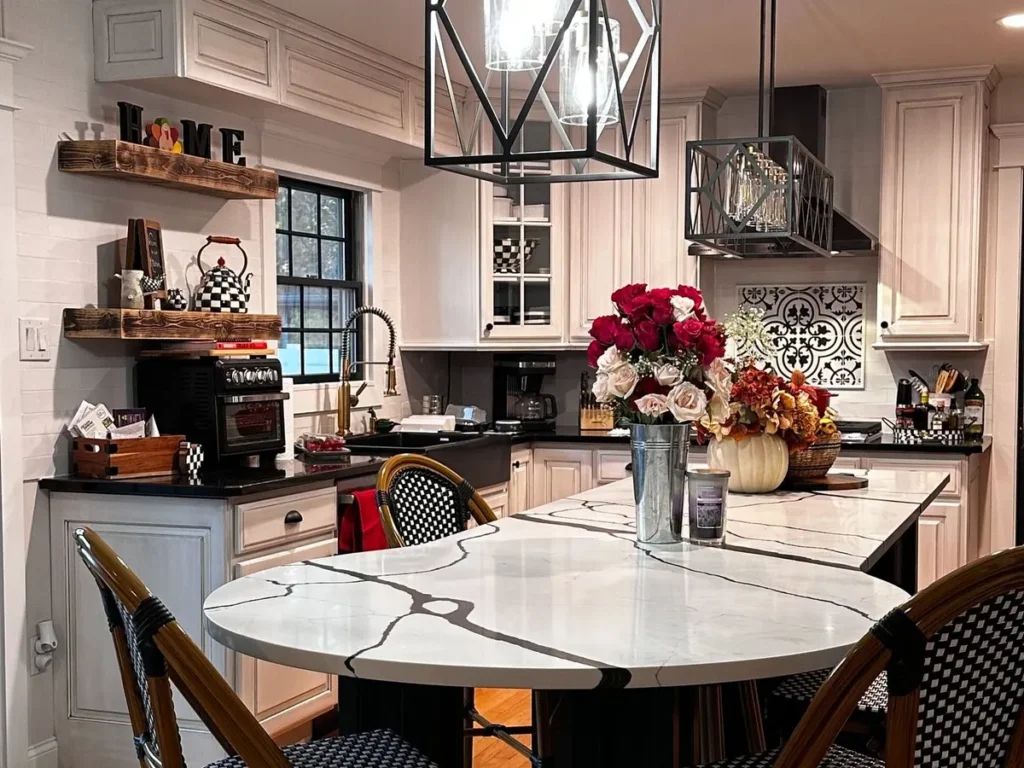
In a Philadelphia rowhome kitchen we remodeled, we paired white cabinets with two rustic wood floating shelves beside the window. The shelves hold a few decorative pieces and everyday items. The cabinets next to them handle the rest.
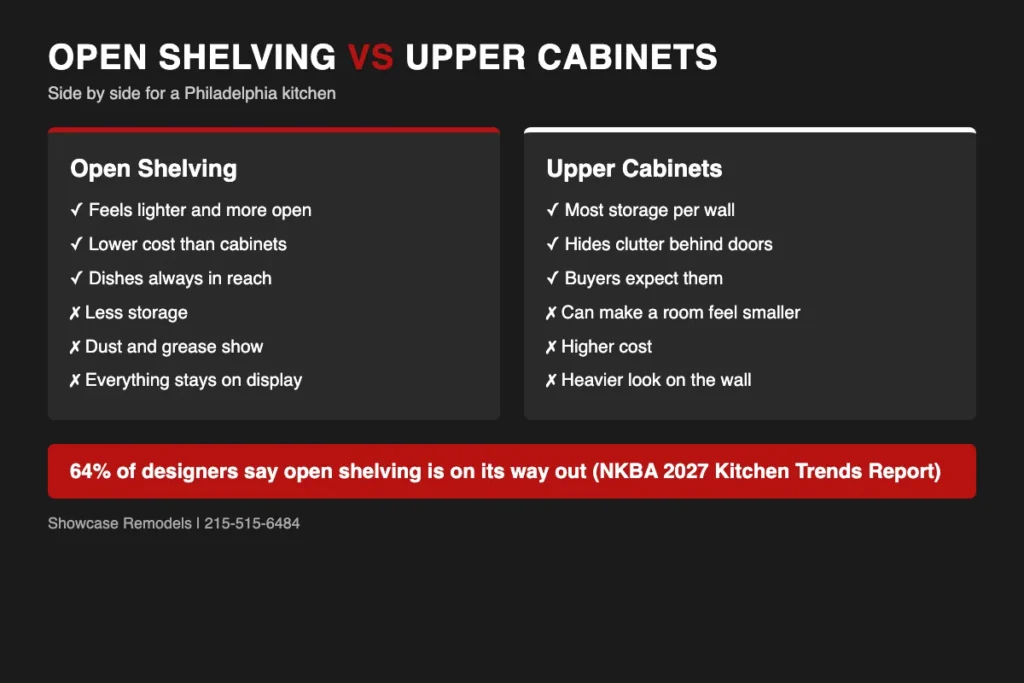
In another Philadelphia kitchen, a pair of floating shelves sits above the counter next to tall white cabinets and a long island. The tall cabinets carry the heavy storage. The shelves add a spot for the coffee maker, a clock and a plant.
Both kitchens use the same idea. Closed cabinets do the heavy lifting. Open shelves add character in one spot, usually a short wall or the space beside a window.
Philadelphia kitchens also run into old walls, radiators and low ceilings. We measure first and then say what each wall can take. That tells us whether a run of uppers or one open shelf is the right call.
How Do You Decide for Your Kitchen?
Start with what you own. Count the dishes, pots and small appliances you use each week. If they will not fit on a few shelves, you need cabinets.
Choose Upper Cabinets If
You have a small kitchen, a big family, or a lot of mismatched items. You also want them if you plan to sell in the next few years or cook a lot near the walls.
Choose Open Shelving If
You keep a short, matching set of dishes and enjoy styling them. It also fits a kitchen that needs more light, such as one with a dark wall or a narrow room.
Mix Both
Many kitchens land here. Keep cabinets on the main wall and use one or two shelves near the window or range. Test it first by taking the doors off one cabinet for a few weeks.
If you are still weighing finishes, see our guide to the best paint finish for kitchen cabinets. If you are updating fixtures too, read whether touchless kitchen faucets are worth it.
Think about the wall behind the counter as well. A tile backsplash that runs up to the ceiling looks great behind open shelves. Behind cabinets it is hidden, so you can save on tile and spend it elsewhere.
Whatever you pick, plan it before you order. The wall layout, lighting and outlets all change with the choice.
Frequently Asked Questions
Usually yes. Shelves need boards and brackets, while cabinets need boxes, doors and hardware. Cabinets add storage, so the extra cost often pays for itself. Ask for a quote on both so you can compare real numbers.
A few shelves in a kitchen with plenty of cabinets rarely hurt. Removing all upper cabinets can. Most buyers expect closed storage on at least one wall.
Yes, and it is the most popular answer. Keep cabinets where you need storage and add one or two shelves near a window or the range. Showcase Remodels can plan the mix at a free design consultation at 215-515-6484.
Ready to Plan Your Philadelphia Kitchen?
Showcase Remodels designs and builds kitchens for Philadelphia homeowners. We will walk your space and help you choose the right mix of cabinets and shelves.
