





Understand the “golden triangle” concept
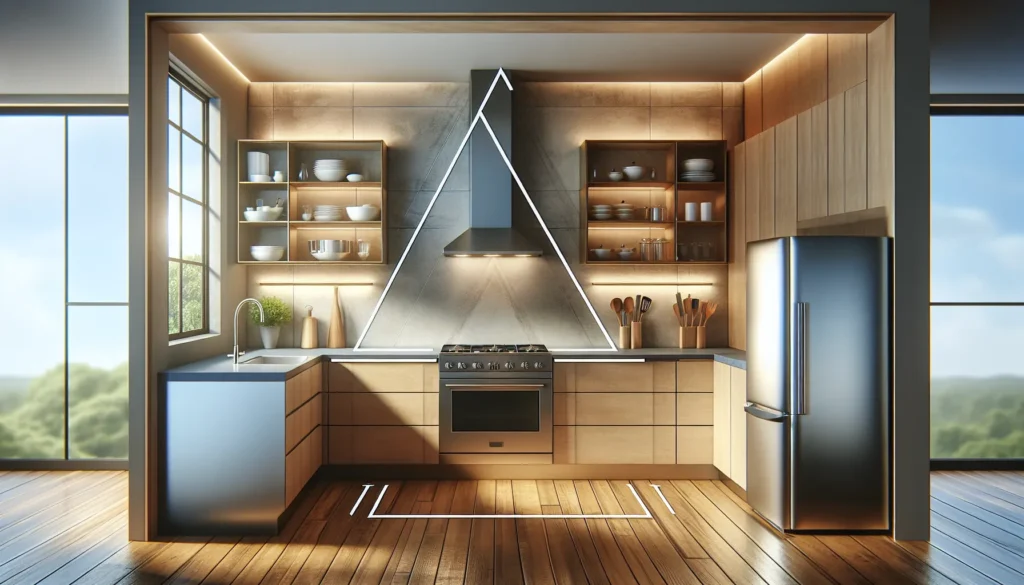
Have you ever wondered why some kitchens feel effortless and others feel cramped or disorganized? The answer often lies in the “golden triangle” layout. It’s a simple concept that places your sink, stove, and refrigerator at three points of a triangle, ideally measuring between four and nine feet on each side. By keeping these stations close, you streamline everything from cooking to cleanup. Researchers even traced this idea back to the 1920s, when designers wanted to limit wasted steps during meal prep. Today, the golden triangle remains a popular guideline and a starting point for kitchen designers who aim to optimize workflow. (Real Simple)
If you’re remodeling your home in Philadelphia, PA, or anywhere else, this layout approach can save time and reduce constant back-and-forth in the kitchen. But does it work for every kitchen size? Let’s break it down so you can decide if it’s right for you. For professional help implementing the golden triangle in your space, explore our kitchen remodeling services.
Explore how it streamlines your routine
Picture a typical cooking task: you grab fresh veggies from the fridge, rinse them in the sink, then sauté them on the stove. With the golden triangle setup, each of these three steps sits within easy reach. You avoid walking long hallways or stepping over stray boxes just to get your ingredients and gear. Instead, each station flows naturally.
According to several professional designers, including Liz Goldberg, positioning your sink in the middle of your countertop with the trash on one side and the dishwasher on the other can keep this workflow feeling even smoother. (Real Simple) It’s all about minimizing extra steps, which can add up if you’re cooking multiple times a day.
Adapt to small or galley kitchens
Small or galley-style layouts can stretch this concept in new ways. You might not have enough room to form a perfect triangle, so instead your sink, stove, and refrigerator might line up on a single wall. That’s okay. Even if the golden triangle can’t fully happen, you can still apply its principles. Try to keep your main work zones clustered so that moving from fridge to sink to stove doesn’t require winding around corners or dodging kitchen island seating.
If limited space has you wondering whether you can follow the golden triangle at all, think about rearranging your appliances. You might find that shifting your refrigerator to create a tighter formation boosts your efficiency. For extra considerations in a compact layout, you could look into simple tips like placing your sink near the stove. Also, if you’re curious about “where should the fridge be in the kitchen?” you can explore more ideas here: where should the fridge be in the kitchen?
Manage larger kitchens or multi-cook scenarios
While smaller kitchens can feel cramped, large kitchens sometimes suffer from the opposite problem, stations so spread out that you need to sprint to grab a spatula. The golden triangle provides an ergonomic reference point even in expansive spaces. For instance, you might place the sink in your island facing out to make dishwashing less isolated or keep the fridge close to your island’s prep zone. This approach balances efficiency with an open feel.
However, if you have multiple cooks at once, the triangle might need to evolve into “work zones.” For example, you might establish a dedicated baking station separate from your main cooking setup. One area holds the sink and stove, while another lies near the fridge or a second sink for quick rinsing. These modifications to the golden triangle can help a big kitchen feel more inclusive and still practical. (Kitchen Design NYC)
Check the recommended distances
Most designers, including those who popularized the golden triangle, recommend the following guidelines for each side of your triangle:
- Keep sides between 4 and 9 feet
- Aim for a total perimeter (summing all sides) between 13 and 26 feet
- Avoid placing large obstacles, like a tall island or full-height pantry, directly between those three stations
Hitting these distances can create a smoother, faster path. However, it’s equally important to consider individual heights and kitchen shapes. If you’re not able to achieve the perfect set of measurements (like in a narrow rowhome kitchen in Philadelphia), no worries. Adapt the distances to your space as close as you can without sacrificing comfort and safety. (Maytag)
Pair with a modern layout approach
Today’s kitchens contain more appliances and features than ever before, wine coolers, extra storage, second sinks, or large islands. It’s no surprise that modern designs often go beyond the original golden triangle rules. You might see a “kitchen rhomboid,” which simply means adding an island or pantry as a fourth station. That can still honor the purpose of the triangle: to trim unnecessary steps and keep cooking tasks grounded in one zone.
If you’re also curious about the broader trends shaping kitchens, check out some options related to contemporary layouts here: what kitchen arrangement is most popular in modern design?
Decide if you should DIY or hire a pro
Remodeling a kitchen is a significant project, especially if you’re planning to change the locations of plumbing and electrical lines to nail down the golden triangle. While smaller changes, like rearranging portable appliances or upgrading storage shelves, can be tackled on your own, structural adjustments call for professional help. Think about important factors:
- Plumbing requirements: Moving your sink often means rerouting water lines
- Electrical considerations: Installing dedicated circuits for your stove or refrigerator
- Ventilation needs: Ensuring proper range-hood ducting and airflow
- Zoning and code requirements: Making sure your new kitchen layout follows local regulations
If you’re in the Philadelphia area, a trusted local remodeler can advise on the feasibility of specific designs, keep your project on schedule, and manage the necessary permits. You’ll also have peace of mind knowing the job meets code. And if you’re curious about feasible budget ranges, see if you should DIY or how professional costs line up by checking: is $10000 enough for a new kitchen?
Tips for enhancing the golden triangle
If you’ve decided to embrace or adjust the golden triangle for a better kitchen flow, you can apply a few more tricks to maximize your layout:
- Simplify traffic flow. If possible, keep major walkways free from seating areas. This helps prevent your cooking zone from getting blocked.
- Centralize your trash or recycling. Following Liz Goldberg’s advice, you can place your trash pull-out by one side of the sink and your dishwasher by the other side to streamline dishwashing.
- Consider a second prep sink. If you have an island, an additional smaller sink can be your veggie and fruit rinse station, reducing time spent crossing the triangle.
- Keep countertop heights and distances in mind. Standard 36-inch counters may work for some, but if you’re taller or shorter, adjusting the height could cut down on back strain.
These moves complement the golden triangle so you can tailor your space to your needs rather than sticking to rigid prescriptions. (The Spruce)
Keep your top kitchen questions in mind
As you plan your next steps, remember that the ultimate goal is convenience, efficiency, and a sense of ease in your daily cooking routine. The golden triangle is simply a time-tested principle. It often pairs nicely with other useful guidelines, such as the number one rule of the kitchen—to keep your space as functional and clutter-free as possible. You can learn more here: what is the number one rule in the kitchen?
If the classic approach aligns with your vision and budget, you’ll likely find it worth the effort. On the other hand, if your space or lifestyle calls for something more flexible, don’t be afraid to tweak the layout. After all, the best design is the one that suits you and your family.
Final takeaway
The golden triangle shows how small design decisions can transform your daily routines. By grouping the sink, stove, and fridge in a triangular pattern, you promote smoother, faster cooking and cleaning. Whether you have a tiny galley kitchen or a sprawling open-concept design, the golden triangle’s focus on efficient movement can inspire you to create a layout that truly works.
If you have any doubts or want a remodel with no stress, reach out to a local contractor who can integrate your needs, manage technicalities, and bring your vision to life. After all, a well-designed kitchen isn’t just about aesthetics, it’s about helping you enjoy every meal, every gathering, and every moment in the heart of your home.