






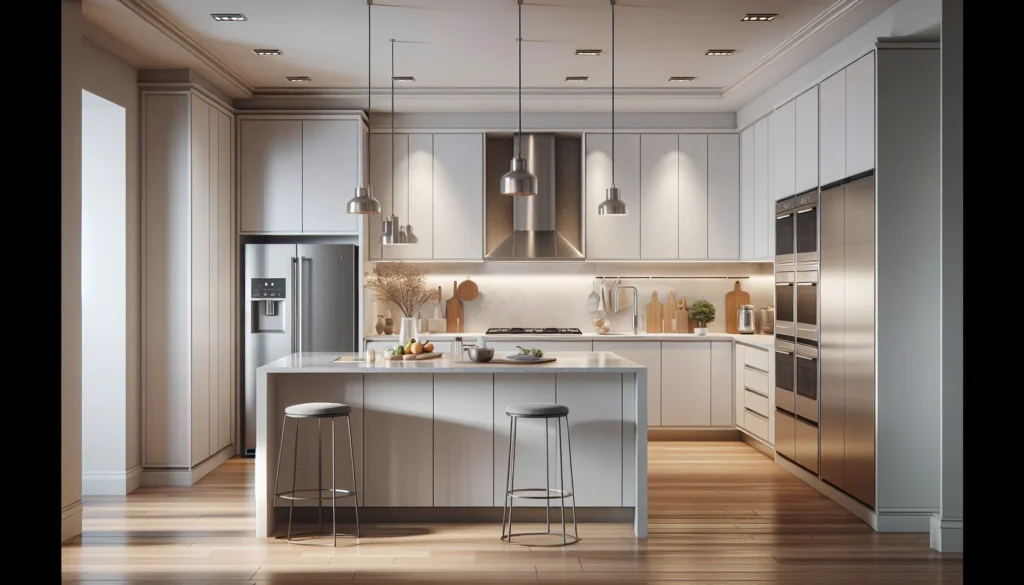
Position the fridge to optimize flow
Where should the fridge be in the kitchen? One of the easiest ways to answer this question is by looking at traffic flow. You want to ensure that opening the refrigerator door neither blocks your main walkways nor interrupts anyone working at the stove or sink. Placing the fridge in a corner is a popular choice because it keeps sightlines open and prevents the door from swinging out into high-traffic zones. It also lets multiple cooks work in peace without bumping into each other, as noted by KitchenAid. (KitchenAid)
If you have a busy household, you need to keep movement smooth between the cooking area and any main entrances. That is why many designers recommend positioning your fridge near the kitchen entrance, so you can unload groceries directly from the door. (Kitchen Design NYC) You also avoid interruptions for the primary cook when others run in for a snack or a drink. For expert guidance on optimizing your kitchen layout, explore our kitchen remodeling services.
Avoid heat and congestion
When deciding exactly where to stand your fridge, you will want to stay clear of heat sources like ovens or radiators. (KitchenAid) Extra heat forces your fridge to work harder, which can shorten its lifespan. If your kitchen layout forces the oven and fridge to share a wall, leave at least 20 inches of space or install a cabinet in between.
Congestion can also hurt your day-to-day workflow. Placing the fridge in a cramped or central passage may increase the chances of bumping into people while opening the door. Instead, try to find a spot that is accessible but not in the direct path from the rest of the home to the living area or backyard. Keeping major appliances spaced out preserves a sense of openness, which is especially important if multiple people in your Philadelphia household love to cook together.
Plan for easy loading
Every well-designed cooking space makes grocery loading a breeze. The fridge should be near a countertop or bench, so you can set down bags of groceries in one motion without trekking clear across your kitchen. (KitchenAid) This arrangement also speeds up your meal prep, since you can grab fresh produce and place it directly on the work surface next to you.
It might be tempting to position a fridge near a window for an outside view. However, experts advise against placing it too close to windows because the unit can obstruct natural light and crowd your design. (Kitchen Design NYC) If a window spot is your only option, try to maintain enough clearance on both sides to open the door easily, and make sure sunshine exposure will not heat up the fridge area too much.
Factor in the working triangle
Another core guideline is the “working triangle,” sometimes known as the “golden triangle.” (what is the golden triangle in a kitchen?) This concept positions the fridge, stove, and sink in a loose triangle that optimizes cooking efficiency. Each side of this triangle should measure between four and nine feet, and no major traffic path should cut across any side.
The classic triangle is all about minimizing steps. Maytag recommends that the sum of distances between your fridge, stove, and sink be at least 13 feet but no more than 26. (Maytag) That sweet spot helps you and your family move easily between chopping vegetables at the sink, grabbing ingredients from the fridge, and tending food on the stove. If you are curious about fundamental kitchen principles, you might also explore what is the number one rule in the kitchen?.
Make the most of corners
Sheltered corners pull the refrigerator out of the way, which can help you maintain an open layout in even the smallest kitchens. This corner placement is often recommended by KitchenAid because it preserves workspace and keeps pathways clear. (KitchenAid) You just need to make sure you have enough room for the door to swing fully. Include an extra two and a half inches of clearance on each side of the fridge, plus about a quarter inch of space on the top for ventilation. Finding a refrigerator model with a door that does not extend too far can also help if the corner is particularly tight.
If you prefer a slightly more central location, you can still harness corner storage for items you might want to keep near the fridge, like frequently used pots or pans. Think about where your pantry or “food zone” is too. (Homes & Gardens) Having the fridge near cabinets and pantry doors makes it faster to get everything you need for a recipe.
Check clearance and ventilation
Fitting a fridge properly is not just about convenience. Keeping enough space around each side is critical. KitchenAid notes that you need a minimum of 2½ inches of clearance on both sides if the fridge is placed next to a wall. (KitchenAid) This ensures your door and hinges never bump or scrape. You also want a quarter inch above or behind the unit for proper airflow, which helps your fridge run efficiently.
Below is a quick reference for key kitchen fridge distances:
- Leave at least four feet of space between the fridge and sink or stove.
- Keep 2½ inches or more on each side if near a wall.
- Maintain 20 inches between the fridge and stove if they share a wall.
- Provide about ¼ inch of extra space on top or the back for good ventilation.
When you draw up plans for a remodel, keep these figures in mind. If your space is limited, consider a narrower or counter-depth fridge so you still get smooth movement in the kitchen.
Design for your routine
You know your daily habits best. Do you store lots of produce that you like to wash immediately? Consider placing the fridge near your sink. Do your groceries often pile up quickly? Position the fridge right by the door so that unloading the car is easier. Many experts suggest that having the sink and fridge in close proximity helps with rinsing and meal prep, ensuring your cooking chain is short. (Homes & Gardens)
If you have a large or frequently busy household, you might even consider two fridges: one main refrigerator that stays closer to your main cooking area, and a smaller one dedicated to snacks or drinks elsewhere. (Homes & Gardens) This keeps traffic from piling up around one appliance. It is also a handy way to stay organized if you do a lot of entertaining.
Remember your broader design choices
Fitting your fridge is only one part of building a modern, functional kitchen. The overall kitchen arrangement influences your efficiency and comfort. If you are exploring the bigger picture, you might want to check out what kitchen arrangement is most popular in modern design? or read about other design rules that can help you plan a space that feels open yet practical.
Whether you have an L-shaped kitchen, a U-shape, or a galley style, consistently size up how different elements work together. Sometimes an island solves problems by giving you more surface area and letting you integrate your fridge along a wall without sacrificing walking space. If you have questions about budgeting for these kinds of upgrades, consider taking a look at is $10000 enough for a new kitchen?.
Next steps for your kitchen remodel
Placing your fridge in the right spot offers immediate benefits: fewer steps while cooking, less bumping into family members, and a layout that feels more natural. If you are redesigning your entire kitchen, you can align the fridge placement with your stove, sink, and pantry for the most efficient working triangle. (Maytag)
If you live in Philadelphia, hiring a local contractor can ensure your investments in cabinetry, appliance placement, and overall design pay off in added home value. Skilled remodelers know the importance of correct measurements and can guide you on selecting narrower or built-in models if your space is tight. They can also suggest creative ways to incorporate multiple fridges or find the ideal corner placement to hold your groceries.
The main takeaway is that your fridge location should suit your cooking style while keeping you comfortable, safe, and efficient. A functional arrangement saves you time and frustration every day. Tweak a few details now, and you will enjoy a smoother, more enjoyable routine for years to come.