







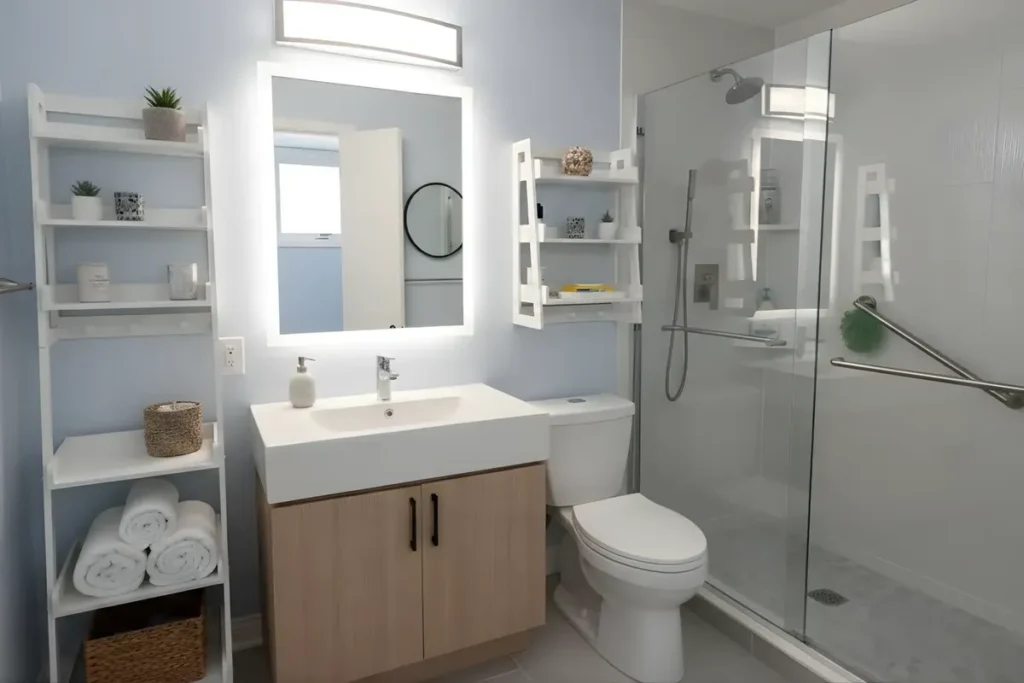
Yes, you can move plumbing in a bathroom remodel. The right plan keeps the work safe, up to code, and on budget. Here is how it works in Philadelphia.
Moving Plumbing Is Possible in Most Homes
You can move the sink, toilet, tub, or shower in most bathrooms. Plumbers do this all the time during a remodel.
The real question is not can you move it. It is how far, how hard, and how much it will cost. Some moves are simple. Others mean opening floors or walls.
We plan every bathroom remodeling in Philadelphia project around your layout and your pipes. That way you get the bathroom you want without surprise costs.
Below we cover what can move, what drives the cost, the toilet question, and how to plan the work the smart way.
What Plumbing Can You Move in a Bathroom?
Almost every fixture can move. The drain lines are the hard part. Water supply lines are much easier to reroute.
Sinks and Faucets
Sinks are the easiest fixture to move. The supply lines and drain are small and flexible. You can shift a sink a few feet without much trouble.
Showers and Tubs
Showers and tubs can move too. They need a drain in the floor and a slope so water runs out. That makes the job a bit bigger than a sink.
Toilets
Toilets are the hardest to move. They sit on a large drain pipe that needs the right slope. Moving one often means opening the floor below.
If you are switching from a tub to a shower, the drain often needs to move. Our tub-to-shower conversion work covers exactly this kind of change.
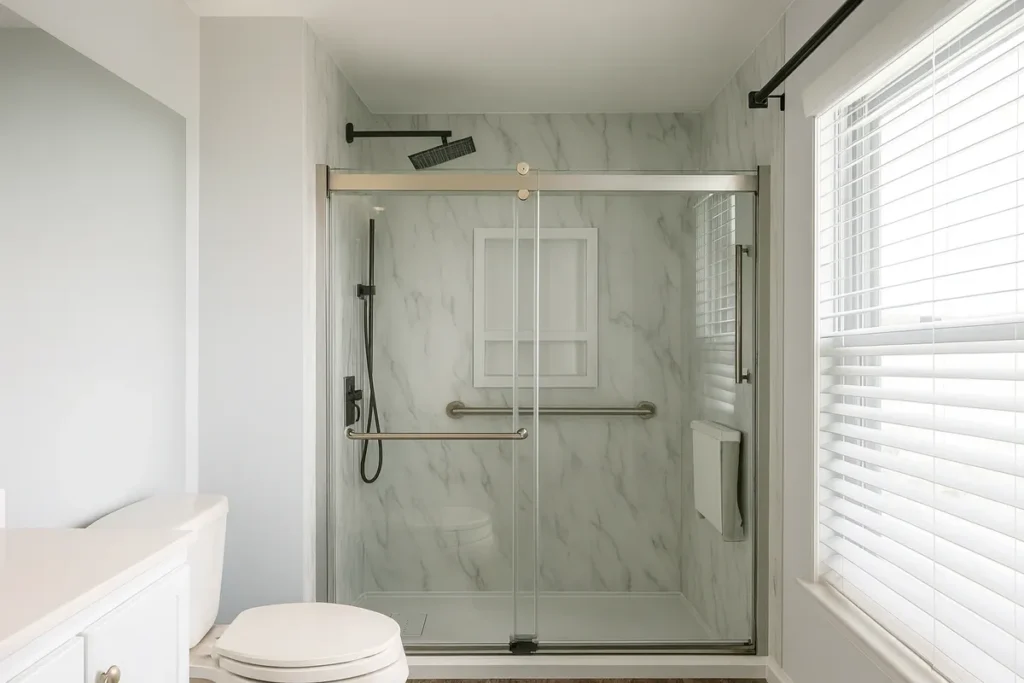
How Much Does It Cost to Move Plumbing?
There is no single price. The cost depends on what moves, how far, and how easy your pipes are to reach.
How Far You Move It
A short move costs less than a long one. Shifting a sink one foot is cheap. Moving a toilet across the room costs much more.
Floor and Wall Access
Pipes hidden in a slab or a tight wall cost more to reach. Pipes in an open basement ceiling are easy and cheap to change.
Your Home's Age
Many Philadelphia row homes have old pipes. If we find worn drains while the wall is open, fixing them adds cost but saves you from leaks later.
Doing things in the right order also keeps costs down. See our guide on What order should you remodel a bathroom in so the plumbing work lines up with the rest of the job.
Can You Move a Toilet in a Bathroom Remodel?
Yes, you can move a toilet. It is just the most involved fixture to relocate. The toilet drain is wide and needs a steady downhill slope.
Why It Is Harder
The toilet drain ties into the main waste line. To move it, we often open the floor and reroute that pipe. The slope has to be right so waste drains well.
When It Is Worth It
Moving a toilet a few feet can open up a small bathroom. It can also make room for a larger walk-in shower or a double vanity.
How We Keep It Clean
We map the new drain path before any demo. That keeps the floor work tight and your bathroom layout exactly where you want it.
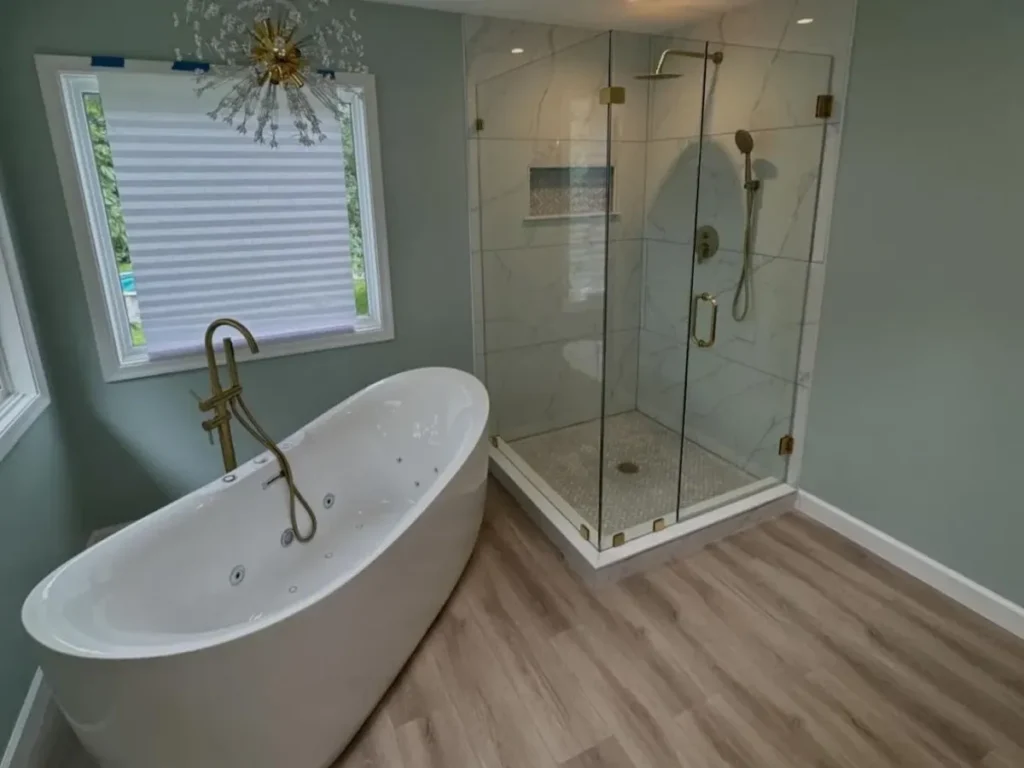
How to Plan a Bathroom That Moves Plumbing
Good planning keeps a plumbing move smooth. The goal is to decide the layout before any wall comes down.
Lock the Layout First
Pick where each fixture goes early. Changing your mind after the pipes move costs real money. A clear plan keeps the job on track.
Pull the Right Permits
Moving drain or supply lines in Philadelphia usually needs a permit and an inspection. A licensed crew handles this so the work passes and stays legal.
Build In Time for Pipe Work
Opening floors and rerouting pipes adds days to a remodel. Knowing this up front keeps your timeline honest.
Want a feel for the schedule? Our guide on How long a conversion takes shows how plumbing work fits into the full timeline.
All of this rests on solid pipe work. Learn more about our plumbing for bathrooms so you know who handles the rough-in and the final hookups.
Opening old drain lines can also uncover hidden water damage during a remodel.
Frequently Asked Questions About Moving Bathroom Plumbing
Talk to a Philadelphia Bathroom Remodeler
Moving plumbing opens up new layouts and a better bathroom. The key is a clear plan and a licensed crew that does it right.
Showcase Remodels relocates sinks, showers, tubs, and toilets across Philadelphia. We map the pipes, pull the permits, and keep the job clean.
Call 215-515-6484 today for a free estimate. This Old House covers bathroom plumbing topics including drain slope requirements, permit considerations, and what it costs to relocate fixtures.
