







Picking a Kitchen Floor That Lasts
Porcelain tile is the best flooring for most kitchens, and luxury vinyl plank is the best budget pick. Both handle spills, heat, and heavy foot traffic. If you want a full tear-out and install, see our kitchen flooring replacement in Philadelphia.
This guide compares the main options by cost, water resistance, and lifespan. It also covers what goes under the floor, because that part decides how long a floor really lasts.
Which Kitchen Flooring Holds Up Best?
A kitchen floor takes more abuse than any other floor in the house. It gets dropped pans, spilled water, dishwasher leaks, and chairs dragged across it every day. The best floor stays flat, resists water, and cleans up fast.
Porcelain Tile
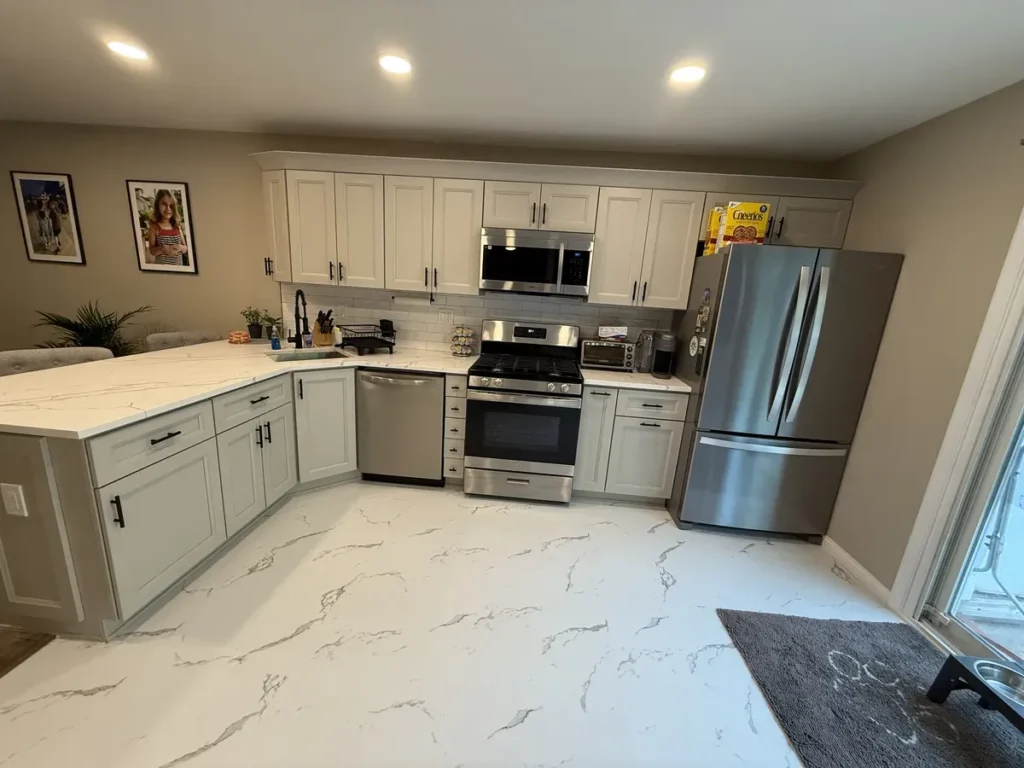
Porcelain is dense and holds very little water, which makes it the toughest choice for a kitchen. It does not dent, and hot pans will not hurt it. The downsides are a cold, hard feel underfoot and grout lines that need sealing and cleaning.
Luxury Vinyl Plank
Luxury vinyl plank, often called LVP, is waterproof and soft underfoot. It is also the lowest-cost option. A heavy fridge dragged across it can scratch or dent it, so use a floor protector when you move appliances.
Hardwood and Engineered Wood
Wood adds warmth and can add resale value. It scratches over time and does not like standing water. Engineered wood handles humidity better than solid wood, so it is the safer wood pick for a kitchen.
Many homeowners already lean toward vinyl. A Floor Covering Weekly kitchen and bath roundup reported that luxury vinyl wood-look planks led all kitchen floor choices at 48 percent.
How Much Does Kitchen Flooring Cost?
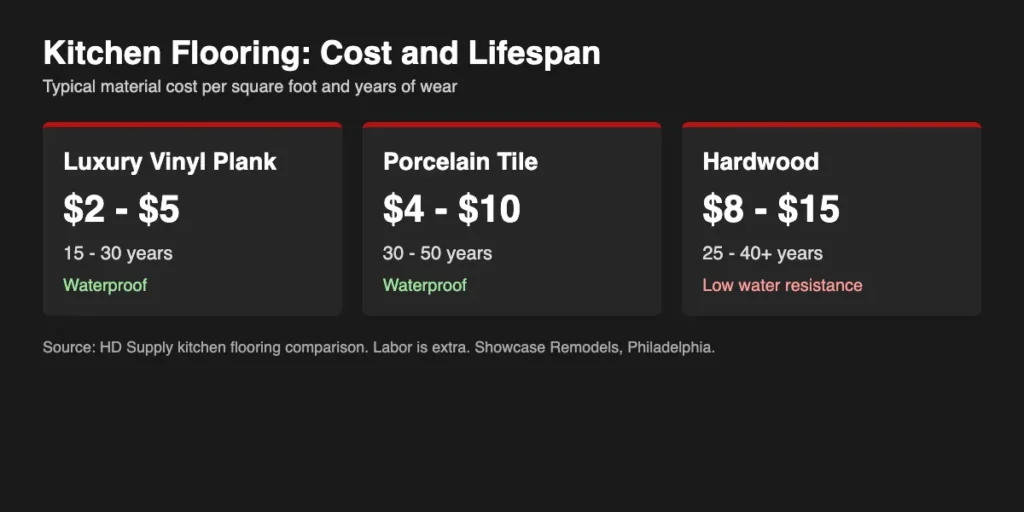
Material prices vary by brand, but an HD Supply kitchen flooring comparison gives a useful range. LVP runs about $2 to $5 per square foot and lasts 15 to 30 years. Porcelain tile runs about $4 to $10 and lasts 30 to 50 years. Hardwood runs about $8 to $15 and lasts 25 to 40 years or more.
Those numbers cover materials. Labor is extra, and it climbs when the old floor needs to come out or the subfloor needs repair. Tile also costs more to install than vinyl because it needs more prep and more time.
A typical kitchen has 150 to 250 square feet of floor. At those sizes, the gap between vinyl and tile is real money, but the longer life of tile often evens it out. Think about how long you plan to stay in the house.
Upkeep matters too. Tile needs the grout sealed every year or two. Vinyl needs only a damp mop. Wood needs gentle cleaners and a refinish every ten to fifteen years. A floor that is easy to clean is more likely to stay looking new.
Water is the other cost to watch. Hardwood has low water resistance, so one slow dishwasher leak can mean replacing boards. That risk is the main reason many homeowners pick tile or vinyl for the kitchen.
What Works Best in Philadelphia Homes?
Older Philadelphia homes make the subfloor the biggest factor. Row homes in Center City and twins in South Philly often have plank subfloors, plaster patches, and layers of old vinyl glued down over the years. None of that is flat enough for a new floor.
Showcase Remodels has replaced kitchen floors across Philadelphia since 2002. Our crew pulls the old floor, screws down loose boards, scrapes off old glue, and checks the surface with a long straightedge before any new material goes in. Tile needs a stiff, flat base, so older joists sometimes get extra support first.
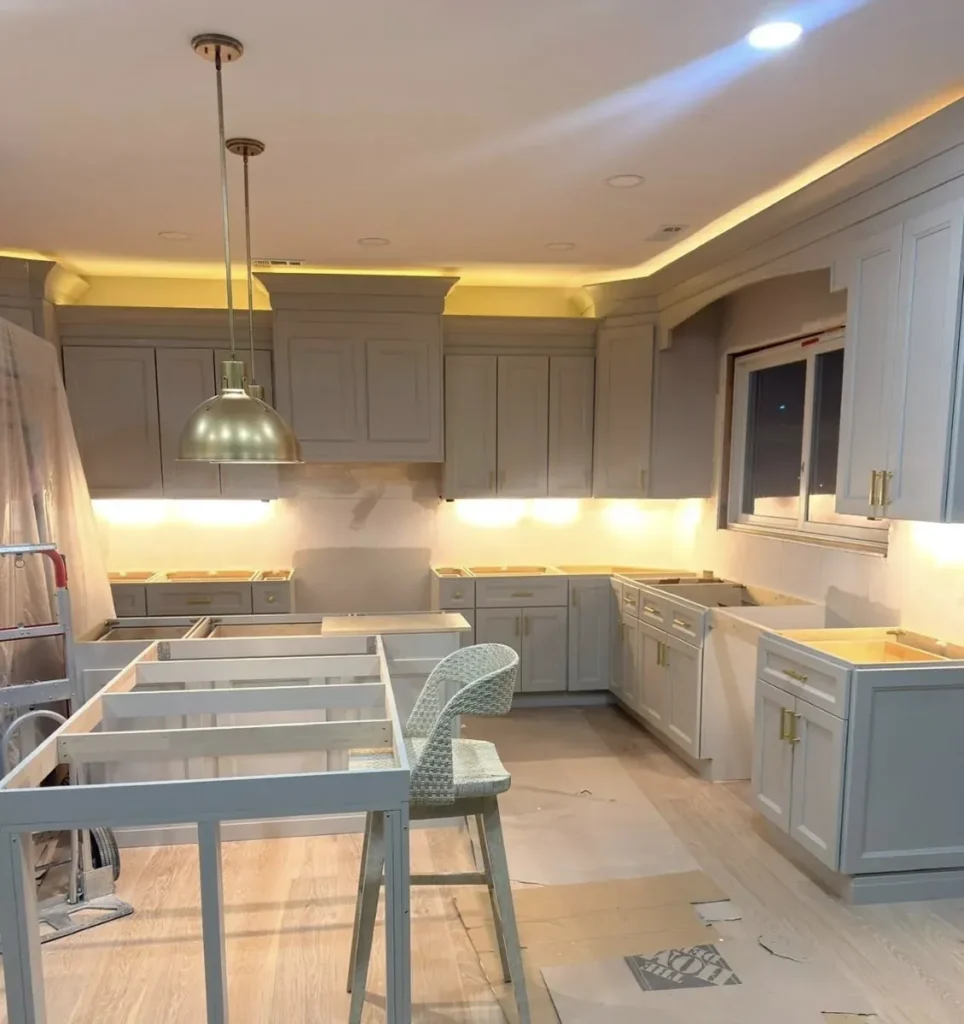
In a recent Bustleton kitchen remodel, we installed a light wood floor that runs through the new cabinet layout. The wood ties the room together, and the clean base underneath keeps it flat for years.
Flooring pros also warn about hidden leaks. As Flooring Clarity explains, standing water from a slow appliance leak can seep through seams and edges. It also recommends a wear layer of 20 mils or thicker for kitchen vinyl.
How Do You Pick the Right Kitchen Floor?
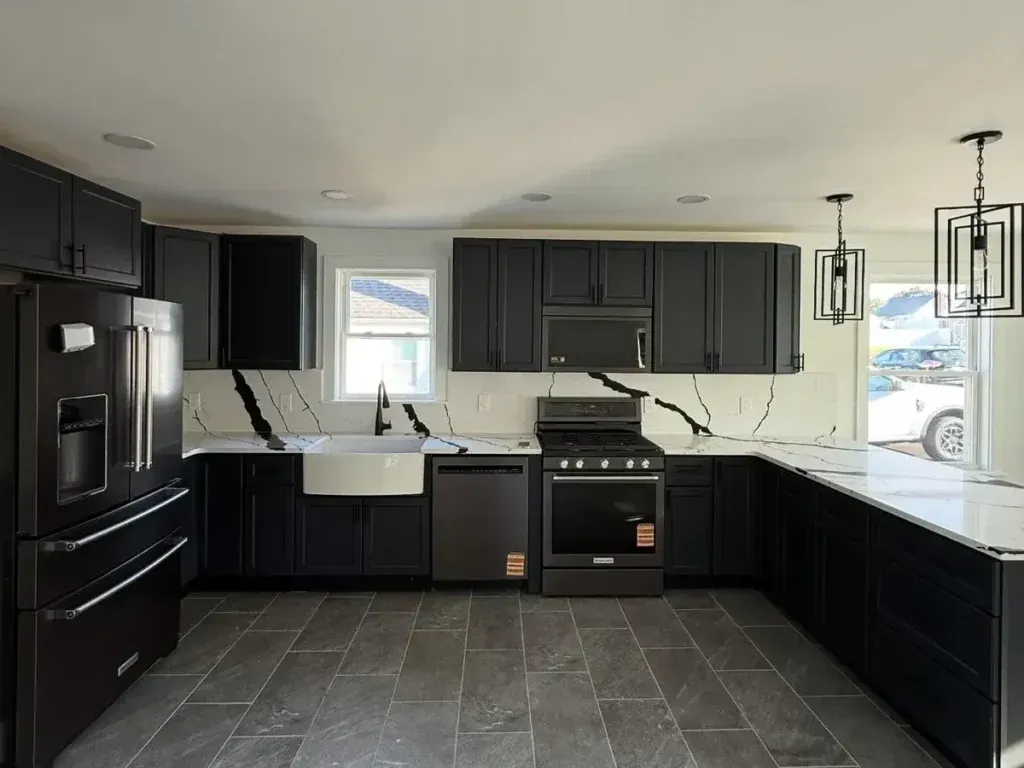
Start with your budget and how hard the kitchen gets used. A busy family with kids and dogs should look at porcelain tile or a thick-wear-layer LVP. If you love the look of wood and keep spills in check, engineered wood is a fair match.
Next, match the floor to the rest of the first floor. A hard threshold strip between the kitchen and a hallway should look planned, not like an afterthought. Matching the height of both floors keeps the seam clean and safe to walk on.
Do the floor at the same time as the other kitchen work. New cabinets and counters can chip a fresh floor, and pulling cabinets later can leave gaps. Our guide to the kitchen remodel timeline in Philadelphia shows where flooring fits in the schedule.
Budget the floor into the whole project. Our posts on what a kitchen remodel costs in Philadelphia and common kitchen remodel mistakes help you plan it. Floor choices also affect the look of your cabinets and counters, so see quartz vs granite countertops before you lock in colors.
Think about comfort as well. If you stand at the stove for long stretches, a softer floor like vinyl or wood is easier on your feet and knees. Tile feels cold in winter, and radiant heat under tile can fix that for a higher price.
Hire a pro when the subfloor is uneven, soft, or squeaky, or when you want tile. Click-together vinyl can be a DIY job on a flat floor. Tile and wood usually are not.
Flooring runs with the layout and the schedule. See whether open concept kitchens are still in style before you set the floor line, and living at home while the work runs for what the install week looks like.
Kitchen Flooring Questions
Yes. Luxury vinyl plank is waterproof, comfortable to stand on, and the lowest-cost option. Choose a wear layer of 20 mils or more and protect it from heavy appliances.
Tile is better for most kitchens because it resists water, heat, and scratches. Hardwood looks warm but marks and swells more easily. In Philadelphia row homes with older subfloors, either one needs a flat, solid base first.
Porcelain tile is the most durable choice, with a lifespan of 30 to 50 years. Many Philadelphia homeowners pick it for busy family kitchens. Our crew prepares the subfloor first so the tile does not crack.
Ready to Replace Your Kitchen Floor?
Showcase Remodels installs kitchen floors for homeowners across Philadelphia. Call us for a free in-home estimate and we will check your subfloor and help you pick the right material.
